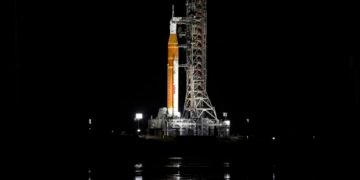























NASA Prepares for Critical Testing of Artemis II Mission to the Moon
NASA is set to commence essential testing of its Artemis II mission, which aims to send four astronauts on a journey around the moon. Initiating the fueling phase known as a “wet dress rehearsal,” the agency is working towards a significant milestone in space exploration after a brief delay due to adverse weather conditions.
Why It Matters
The Artemis II mission represents a pivotal step in NASA’s ongoing efforts to return humans to lunar exploration for the first time in over five decades. This mission not only aims to circle the moon but is also crucial for future endeavors, including manned missions to Mars. The success of Artemis II could enhance international collaboration in space and spark greater public interest in technological advancements.
Key Developments
- NASA’s wet dress rehearsal is set to begin, involving the loading of over 700,000 gallons of fuel into the Space Launch System (SLS) rocket.
- Testing was initially delayed due to freezing temperatures at the Kennedy Space Center in Florida.
- A simulated launch countdown will occur Monday evening, lasting from 9 p.m. to 1 a.m. ET.
- The Artemis II mission, now scheduled for launch no earlier than next Sunday, will last approximately 10 days.
- NASA astronauts remain in quarantine ahead of the launch to minimize health risks.
Full Report
Wet Dress Rehearsal
The wet dress rehearsal is a comprehensive testing phase where engineers and crew will assess the spacecraft ahead of launch. This process includes simulating the countdown, verifying systems, and loading liquid oxygen and hydrogen fuel into the vehicle. The countdown clock commenced at 8:13 p.m. ET on Saturday, signaling the start of preparations leading up to the simulation.
Fuel Loading and Testing Procedure
During the rehearsal, teams will not only load the fuel but will also practice removing it from the rocket, ensuring all systems function correctly during an actual launch scenario. As part of the preparation, the Orion spacecraft has been powered up for several days, and engineers plan to charge its flight batteries, accommodating for the recent cold temperatures that necessitated adjustments in testing schedules.
Quarantine Measures
The astronauts selected for the mission—Victor Glover and Christina Koch from NASA, Reid Wiseman from NASA, and Jeremy Hansen from the Canadian Space Agency—are currently in quarantine in Houston. This precaution is intended to limit their interactions with the outside world, thereby reducing any risk of illness before their embarkation into space.
Context & Previous Events
This upcoming mission represents the first crewed flight to the moon since Apollo 17 in 1972. While the initial launch date was anticipated for this Friday, NASA has announced that it will not occur any sooner than next Sunday, with further opportunities available in March and April. This mission is a part of NASA’s long-term objectives to establish a sustainable human presence on the lunar surface and eventually explore Mars.






