






















Rising Tensions: Iran Claims Military Readiness Amid U.S. Uncertainty
Recent developments in U.S.-Iran relations have sparked increased tensions, as Iranian officials assert their military preparedness in response to ambiguous U.S. threats of potential military action. This standoff follows President Donald Trump’s refusal to disclose whether a definitive decision has been made regarding military measures against Iran, raising concerns over the escalating situation.
Why It Matters
The ongoing discord between the U.S. and Iran has significant implications for regional stability and international diplomacy. Iran’s declaration of military readiness, combined with U.S. military positioning, underscores the potential for conflict, which could have repercussions beyond bilateral relations. The dynamics also reflect broader issues concerning nuclear non-proliferation and human rights amid protests within Iran.
Key Developments
- President Trump stated, "I certainly can’t tell you" when asked about a final decision on military action against Iran.
- U.S. naval forces have reportedly been deployed to the region.
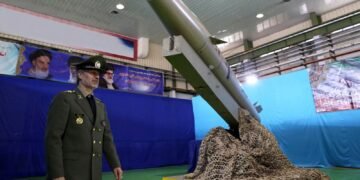
- Iranian General Amir Hatami claimed Iran is at a "high level of military readiness" and is closely monitoring U.S. activities.
- The Iranian parliament discussed the EU’s designation of Iran’s Islamic Revolutionary Guard Corps as a terrorist entity.
- An Iranian security official noted that negotiation frameworks are being developed, despite Supreme Leader Ayatollah Ali Khamenei’s opposition to direct talks with the U.S.
- Two explosions occurred in Iran, resulting in fatalities and injuries, although the government denied that military leaders were targeted.
Full Report
U.S. Statements and Movements
On a recent flight to Florida, President Trump responded to inquiries about military action against Iran, confirming that significant naval forces were en route to the region. Despite expressing hope for a diplomatic resolution that would include the cessation of nuclear weapons activities, he noted that he could not provide further details about the U.S. strategy. Trump’s ambiguous comments have led to speculation regarding Iran’s perception of American resolve.
Iranian Military Readiness
General Amir Hatami, the commander-in-chief of Iran’s regular army, conveyed a defiant stance in light of U.S. military maneuvers. He emphasized Iran’s state of readiness and surveillance capabilities, warning that any misstep by U.S. forces could jeopardize the security of not just U.S. personnel but also the broader region. Hatami declared, "Our fingers are on the trigger," indicating a readiness to respond to any perceived aggression.
Legislative Reactions in Iran
In Tehran, the atmosphere reflected a mixture of defiance and potential openness to negotiations. Iran’s parliamentary speaker labeled European Union military forces as terrorist groups, reflecting heightened tensions following the EU’s designation of Iran’s Islamic Revolutionary Guard Corps as a terrorist faction in response to its violent repression of protestors. However, Ali Larijani, a prominent security official, suggested that frameworks for negotiations were advancing, albeit against a backdrop of skepticism from Iran’s Supreme Leader, who has consistently rejected direct engagement with the U.S.
Civil Unrest and Associated Violence
The situation within Iran remains tumultuous, particularly following violent protests. Recent reports indicate that two explosions occurred in separate Iranian cities, leading to casualties, including a four-year-old girl and injuries to several others. While Iranian authorities deny any targeting of military leadership, these incidents highlight the internal strife that complicates the external diplomatic landscape.
Context & Previous Events
The recent surge in tensions is set against a backdrop of ongoing protests in Iran, with citizens demanding political reform and accountability. Iran’s harsh response to dissent has drawn international condemnation. The U.S. has issued warnings regarding military responses to Iran’s crackdowns on protesters and its ongoing nuclear activities, further complicating the geopolitical landscape.
This evolving story remains critical as it captures the intersection of internal political struggles within Iran and external pressures from the U.S. and allied nations, presenting a volatile mix that could shape the future of regional peace and security.