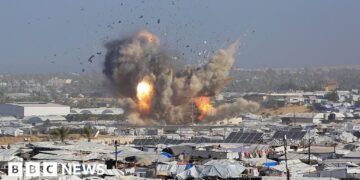























Rising Tensions: Israel’s Military Strikes Amid Ceasefire Disputes
Israel’s military confirmed that airstrikes were carried out during an ongoing ceasefire, a development that heightens tensions between the nation and Hamas. Both parties have accused one another of violating the terms of the truce, complicating efforts for stability in the region.
Why It Matters
The renewed hostilities come at a crucial time, as international efforts to mediate peace have stalled. The breakdown in communication and accusations of ceasefire violations signal potential for further escalation in an already volatile environment, threatening civilian safety and complicating humanitarian efforts.
Key Developments
- Israeli military confirms airstrikes conducted despite ceasefire agreement.
- Bitter accusations exchanged between Israel and Hamas over violations of the truce.
- International community remains concerned about the potential for escalating violence.
Full Report
Military Actions Confirmed
The Israeli Defense Forces have officially acknowledged conducting military strikes during a period meant for ceasefire. The announcement raises questions about the integrity of the ceasefire and highlights the fragile nature of peace negotiations in the area.
Diplomatic Reactions
Both Israel and Hamas have leveled accusations against each other, claiming the other side has breached the ceasefire terms. This back-and-forth not only escalates hostilities but also complicates efforts by mediators aiming for a lasting peace solution.
Concerns Over Civilian Safety
With ongoing strikes, there are increasing fears regarding the safety of civilians caught in the crossfire. The humanitarian implications of renewed violence could hinder aid delivery and exacerbate already critical conditions in the region.
Context & Previous Events
Recently, international stakeholders had made attempts to broker peace amid escalated tensions in the Israel-Hamas conflict. Such efforts had sought to establish a more stable environment, yet the current discord indicates significant challenges ahead.