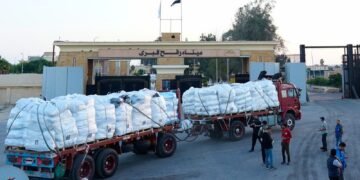























Rafah Crossing Reopens with Stringent Restrictions Amid Ongoing Conflict
The Rafah crossing, a critical gateway between Gaza and Egypt, is set to reopen, albeit under strict limitations. Starting Sunday, select individuals will be allowed to travel both ways; however, the reality is much more complex than the headline suggests.
Why It Matters
This reopening marks a significant moment amid the ongoing humanitarian crisis and conflict in Gaza. While it offers a lifeline for some, the stringent requirements and limited capacity highlight the complexities of the situation, revealing ongoing tensions and the precarious balance between security and humanitarian needs.
Key Developments
- The Rafah crossing will allow limited transit of individuals starting Sunday.
- Only those who previously left Gaza during the conflict will be permitted to return, with a cap of 150 people per day.
- Israel will not restrict the number of people wishing to leave Gaza.
- Individuals must apply for advance security screening administered by Israel’s Shin Bet, with further checks by Egyptian and European Union officials.
- An Israeli presence will check those returning to Gaza after passing through Egyptian security.
- The Gaza side has been under Israeli military control since May 2024.
Full Report
Complicated Process Ahead
Individuals intending to use the Rafah crossing will face a multi-layered screening process. Those returning to Gaza must first apply for security screening in advance. This initial step will be managed by Israel’s Shin Bet, while ground checks will involve officials from Egypt and the European Union. The expectation is that a substantial number of individuals will be reliant on these checks as they cross the border, which may lead to friction and delays.
As an additional layer of security, Israel will utilize facial recognition technology to monitor those departing Gaza, scanning for individuals considered dangerous by their standards. However, for those seeking to return to Gaza after passing through Egyptian security, the process will involve an additional checkpoint controlled by Israeli officials, promising a cumbersome experience for returnees.
Ongoing Humanitarian Concerns
The reopening of this crossing is significant for many individuals in need of urgent medical treatment, with the World Health Organisation estimating that nearly 20,000 people may require evacuation from Gaza. This offers a glimmer of hope amid widespread devastation, yet the reality of returning home remains fraught with uncertainty, especially for those whose neighborhoods have been heavily damaged or destroyed.
Reports indicate that about 100,000 individuals have fled Gaza since the start of the current conflict. As residents weigh the decision to return to their homes, they face the grim reality of significant infrastructure damage and continued military presence in parts of the Strip.
Context & Previous Events
Since May 2024, control over the Gaza side of the Rafah crossing has been maintained by Israeli military forces. The reopening aligns with a U.S.-led peace initiative, reflecting ongoing attempts to find a resolution to the persistent conflict and humanitarian issues affecting the region. The division in Gaza is further complicated by a "yellow line" that separates the Israeli-occupied zone from areas controlled by Hamas.