






















Rising Tensions Surround Antisemitism and Political Rhetoric
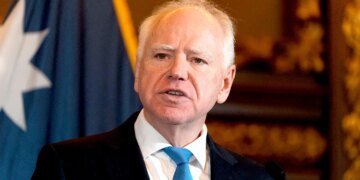
Amid escalating incidents of antisemitism, Minnesota Governor Tim Walz has faced backlash for comparing federal immigration enforcement to the Holocaust. His comments have stirred outrage among Jewish organizations and the Holocaust Museum, emphasizing the misuse of historical atrocities in political discourse.
Why It Matters
The events unfold in a context where antisemitism has surged in various sectors, including politics and social media. Such comparisons risk trivializing historical genocides and exacerbating societal tensions, illustrating the urgent need for responsible discourse around sensitive topics.
Key Developments
- Governor’s Controversial Remarks: Walz has been criticized for equating ICE enforcement with the experiences of Anne Frank, which many advocates label as offensive and ignorant.
- Hate Crime Investigation: A driver in New York City was arrested after repeatedly ramming a vehicle into the Chabad-Lubavitch World Headquarters, prompting investigations by police and the Justice Department.
- UNRWA Under Fire: Israeli forces have demolished the headquarters of the United Nations Relief and Works Agency (UNRWA) in Jerusalem, citing concerns over alleged ties to Hamas and the perpetuation of antisemitism.
- Columbia University Tensions: Incoming university president Jennifer Mnookin is facing criticism from anti-Israel activists over her handling of protest encampments at her former institution.
Full Report
Governor Walz’s Remarks Spark Outrage
The remarks made by Governor Tim Walz during a press conference have ignited significant controversy, with Jewish groups condemning the analogy as a distortion of historical facts. Critics argue that such comparisons can dilute the gravity of the Holocaust and lead to dangerous rhetoric. The Holocaust Museum has urged political leaders to refrain from invoking such sensitive references in their arguments.
Hate Crime Investigation Underway in NYC
In an alarming development, a driver was apprehended after aggressively targeting the Chabad-Lubavitch World Headquarters in Brooklyn. The New York Police Department is investigating the possibility of a hate crime, with early reports suggesting the act was intentional. Fortunately, no injuries were reported, and further inquiries are being conducted, including a civil rights probe by the Justice Department.
Israeli Actions Against UNRWA
Israeli forces conducted a demolition of UNRWA’s headquarters in Jerusalem, further heightening global scrutiny of the agency’s operations amid allegations of anti-Jewish indoctrination and connections to Hamas. Despite evidence suggesting complicity, the United Nations has renewed UNRWA’s mandate, inciting a sharp backlash as questions surrounding its role in regional conflict mount.
Leadership Challenges at Columbia University
Jennifer Mnookin’s appointment as Columbia University’s president faces immediate challenges, as anti-Israel activists criticize her for previous actions seen as authoritarian. This leadership transition occurs against a backdrop of escalating campus protests and federal scrutiny regarding antisemitism, highlighting the complicated dynamics universities now navigate.
Context & Previous Events
The rising antisemitism in the U.S. has been marked by various high-profile incidents and political discourse. Recent events, including the October 7 Hamas attacks, have raised alarm about the activities and legitimacy of organizations like UNRWA. These circumstances call for a reassessment of the narratives surrounding political and humanitarian responses to this ongoing crisis.






