






















Sarah Mullally Becomes First Female Archbishop of Canterbury
Sarah Mullally made history on Wednesday as she stepped out of St. Paul’s Cathedral, not just as the bishop of London, but as the first woman to lead the Church of England and the worldwide Anglican Communion. This landmark appointment represents a significant moment for the Anglican community, which has grappled with issues of gender and inclusivity.
Why It Matters
Mullally’s election as archbishop symbolizes a critical shift in an institution that has historically resisted gender equality. Her role is essential in modernizing the Church of England amid ongoing debates about women’s rights and LGBTQ inclusion within the Anglican Communion, which encompasses 100 million followers across 165 nations. This appointment signifies a move toward inclusivity in a religious context, challenging long-held traditions that have often marginalized women and other groups.
Key Developments
- Mullally, aged 63, was officially confirmed as the Archbishop of Canterbury during a ceremonial service at St. Paul’s Cathedral in London.
- She received loud applause as she took on her new responsibilities, with fellow bishops vocally welcoming her.
- Mullally’s confirmation marks a significant milestone, following the ordination of the Church of England’s first female priests in 1994 and its first female bishop in 2015.
- The new archbishop faces challenges within the Anglican Communion, notably concerning divided opinions on women’s leadership and LGBTQ inclusion.
- Gafcon, a conservative Anglican organization, criticized her appointment, emphasizing a traditional belief that only men should serve as bishops.
Full Report
Ceremony of Confirmation
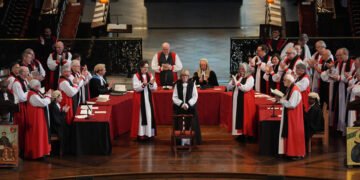
The ceremony to confirm Mullally’s election was marked by traditional elements, including a performance by the cathedral choir and the presence of bewigged judges overseeing the legal proceedings. As she was officially acknowledged, she faced her congregation amid loud applause and enthusiastic shouts of welcome from surrounding bishops. An uninvited heckler attempted to voice opposition but was swiftly removed from the venue.
Divisions Within the Anglican Communion
Experts have noted that Mullally’s appointment could exacerbate existing divisions within the Anglican Communion. Many conservative factions, particularly Gafcon, believe that her support for same-sex marriage blessings and women in leadership roles contradicts traditional biblical interpretation. Rwandan Archbishop Laurent Mbanda expressed concerns about her ability to unify a diverse global church that remains divided on these critical issues.
Challenges Ahead
Mullally steps into her role following the resignation of former Archbishop Justin Welby, who faced criticism for mishandling abuse allegations within the church. As Mullally embraces her leadership, she will need to navigate these persistent scandals and accusations that the Church of England has not done enough to address them.
Official Confirmation Process
Mullally’s appointment was finalized by a 17-member commission that included clerics and lay representatives, receiving approval from King Charles III, the Church’s supreme governor. However, a formal installation ceremony will take place on March 25 at Canterbury Cathedral, marking another step in her transition to leadership.
Context & Previous Events
The Church of England ordained its first female priests in 1994 and its first female bishop in 2015, marking significant milestones in its ongoing journey toward gender equality. The Anglican faith has a complex history that includes a break from the Roman Catholic Church in the 16th century under King Henry VIII, which laid the groundwork for evolving theological stances.






