






















The Doomsday Clock Moves Close to Midnight: A Wake-up Call for Humanity
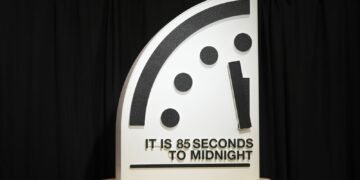
In a stark reminder of escalating global threats, scientists have advanced the Doomsday Clock to 85 seconds to midnight—the closest it has ever been. This update highlights alarming risks posed by nuclear tensions, geopolitical conflicts, and the integration of artificial intelligence into military systems, underlining a critical moment for world leaders.
Why It Matters
The Doomsday Clock serves as a powerful metaphor for humanity’s precarious situation. Set by the Bulletin of the Atomic Scientists, the clock symbolizes the collective dangers facing the globe, with midnight representing total catastrophe. As tensions rise among nuclear powers and unregulated technologies proliferate, the clock’s proximity to midnight signals an urgent need for dialogue and action to avert a looming crisis.
Key Developments
- The clock is now set at 85 seconds to midnight, an adjustment from the previous record of 89 seconds.
- Factors influencing the time shift include aggressive behavior from nuclear states such as Russia, China, and the United States.
- Concerns around escalating military operations, the potential collapse of diplomatic frameworks, and the looming threat of nuclear testing were emphasized.
- The integration of unregulated AI into military applications and its role in misinformation campaigns were cited as growing threats.
- The current geopolitical climate, including ongoing wars and territorial disputes, was identified as contributing to the clock’s adjustment.
Full Report
Current Situation and Humanitarian Risks
After the update, Alexandra Bell, CEO of the Bulletin of the Atomic Scientists, conveyed the gravity of the moment, stating, “Every second counts, and we are running out of time. It is a hard truth, but this is our reality.” She noted that the risk of nuclear engagement remains “unsustainably and unacceptably high,” with the landscape of international relations deteriorating.
Nuclear Threats and Global Tensions
Central to the decision was the increasing hostility among major nuclear powers. Bell pointed out that longstanding diplomatic agreements are facing significant strain, and there are rising concerns about nuclear proliferation. The situation has been exacerbated by military conflicts overshadowed by nuclear threats, including Russia’s ongoing war in Ukraine and heightened tensions in Asia, particularly on the Korean peninsula and regarding Taiwan.
Artificial Intelligence and Misinformation
Beyond traditional military threats, scientists raised alarms about the unregulated use of artificial intelligence in warfare. Maria Ressa, a Nobel Peace Prize winner, echoed these concerns during the announcement, describing the current age as one of “information Armageddon.” This underscores a deeper crisis where technology that promotes disinformation exacerbates societal divides.
Historical Context of the Doomsday Clock
The Doomsday Clock was first conceived in 1947 by scientists, including Albert Einstein and J. Robert Oppenheimer, following the atomic bombings of Hiroshima and Nagasaki. Its initial setting was seven minutes to midnight, symbolizing the ongoing threat of nuclear conflict. Over the years, the clock has served as a barometer for global safety, moving closer to midnight predominantly since 1998, signifying a continuing decline in stability.
Context & Previous Events
In 2023, the clock was set to 90 seconds to midnight, following the increasing dangers connected to the Ukraine war and the nuclear threat, along with issues pertaining to climate change. Spotlights on these dangers have only intensified, leading to the current adjustment. Previous milestones had seen the clock briefly stand at 14 minutes to midnight in 1995, a notable period of relative safety.