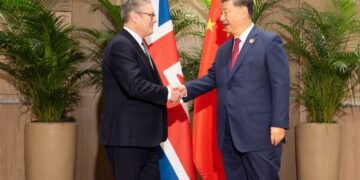























Revamping UK-China Relations: A Diplomatic Balancing Act for Starmer
As UK leader Sir Keir Starmer sets out to reshape relations with China, the stakes are high. With the backdrop of a decade marked by strategic missteps and declining engagement, Starmer seeks to navigate a complex relationship with the world’s second-largest economy.
Why It Matters
The trajectory of UK-China relations over the past ten years reflects broader geopolitical changes that affect not only Britain but also the global landscape. Starmer’s attempts to rekindle ties come at a time when public skepticism about China is rising, amid concerns over human rights violations and military assertiveness. By focusing on trade and investment, he hopes to strike a balance between economic necessity and political caution.
Key Developments
- Sir Keir Starmer aims to revitalize UK-China relations through cautious engagement.
- Trade discussions are centered on services, with an emphasis on increasing market access.
- Espionage concerns and national security considerations loom over negotiations.
- Conflict over Ukraine and the status of Hong Kong’s Jimmy Lai are likely contentious topics.
- China views the UK as a minor player but is eager to leverage the visit for geopolitical advantages.
Full Report
Renewed Diplomatic Efforts
After a turbulent decade, during which UK-China relations soured significantly, Starmer is set to cautiously advance diplomatic ties. He has assembled a substantial business delegation, underscoring the urgency to explore potential economic gains from this partnership.
Trade and Economic Cooperation
Negotiations are likely to focus heavily on trade and investment opportunities. The UK’s primary exports to China consist of services—including legal, financial, and educational sectors, particularly beneficial given the influx of Chinese students to UK universities. Conversely, imports from China mainly involve manufactured goods, ranging from electronics to clothing. While a comprehensive trade agreement remains unlikely due to political complexities, the two nations may pursue smaller deals aimed at enhancing market access and cooperation in areas such as renewable energy.
Security and Espionage Concerns
Starmer will need to be vigilant regarding national security implications throughout the discussions. Allegations of espionage and state interference cast a shadow over the dialogue, particularly following accusations of Chinese state-affiliated individuals targeting influential figures in the UK. The establishment of a new Chinese “mega embassy” in London has raised alarms, prompting concerns about potential surveillance activities linked to this diplomatic expansion.
Contentious Global Issues
Key contentious issues are expected to arise during talks. Starmer might urge President Xi Jinping to intervene in Russia’s ongoing war against Ukraine, as China’s purported neutrality has come under scrutiny. In turn, Xi might raise sensitive topics like Taiwan, an issue that the Chinese government insists must remain untouched by Western interference. Furthermore, the case of Jimmy Lai—a jailed media tycoon and staunch advocate for democracy in Hong Kong—could present a critical challenge for Starmer, as he seeks to advocate for British citizens facing politically charged accusations.
China’s Perspective
For their part, China views the UK as a less significant player on the global stage, ranking outside its top ten trading partners. However, they recognize the value of this diplomatic engagement to reshape perceptions amid increasing tensions with the West. As China seeks to assert itself as a more reliable global power, the potential for positive gestures, such as easing travel restrictions for UK citizens, may surface. Ultimately, China will remain focused on advancing its long-term strategic objectives during this interaction.
Context & Previous Events
The last significant visit by a British Prime Minister to China occurred eight years ago with Theresa May, highlighting the deterioration of diplomatic ties since then. The decade has seen a whirlwind of events contributing to an increasingly skeptical British public regarding China’s intentions, primarily driven by military assertiveness and human rights violations, particularly evident during the COVID-19 pandemic. The once-promising “golden era” of UK-China relations has notably faded, creating a challenging environment for Starmer as he attempts to redefine this crucial partnership.