






















Operation Metro Surge: Federal Immigration Enforcement Faces Backlash in Minnesota
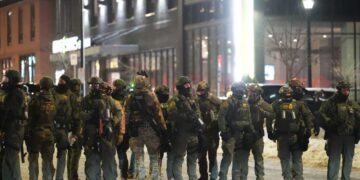
In a dramatic escalation of federal immigration enforcement, thousands of agents have been deployed to Minneapolis under Operation Metro Surge. Following recent violent incidents involving federal officers, Minnesota Governor Tim Walz announced that President Trump is considering scaling back these efforts.
Why It Matters
The mobilization of federal immigration agents has sparked significant protests and legal challenges, raising questions about the impact of such aggressive enforcement tactics on local communities. The unrest has further polarized public opinion, placing added pressure on state leaders and federal authorities to address concerns over safety and civil rights.
Key Developments
- President Trump is sending Border Patrol chief Tom Homan to Minnesota to oversee enforcement operations.
- Following recent shootings of two residents by federal agents, protests in Minneapolis have intensified.
- Governor Walz described a less adversarial response from Trump and indicated that the president would contemplate a reduction in federal agent presence.
- Federal agents’ actions have faced scrutiny, with state officials blocked from accessing evidence related to the shootings.
- Minnesota’s Attorney General has filed for a restraining order against the operation, claiming the deployment is unwarranted.
Full Report
Federal Mobilization and Local Impact
Operation Metro Surge has deployed thousands of federal immigration enforcement personnel to the Twin Cities as part of a strategy to combat illegal immigration. This extensive deployment has met with resistance as it coincides with the tragic deaths of two Minneapolis residents, Renee Macklin Good and Alex Pretti, killed during encounters with federal agents. The shootings have stoked outrage and prompted peaceful protests citywide.
In a recent conversation with the governor and Minneapolis Mayor Jacob Frey, President Trump acknowledged the concerns raised and suggested he would consider reducing the number of agents active in the area. Governor Walz described the dialogue with the president as more collaborative than in previous discussions.
Legal Challenges and Protests
State officials are actively seeking legal remedies to counteract the surge, with Attorney General Keith Ellison highlighting the unprecedented scale of the operation. He stated that the deployment represented the "single largest" gathering of immigration officers in a single location at one time, and he questioned the justification for such a substantial presence.
The state has launched a lawsuit aimed at obtaining an immediate restraining order to revert the number of federal agents to pre-surge levels. Officials have also expressed their frustrations regarding access to evidence from the Department of Homeland Security (DHS), including body camera footage related to the recent shootings.
Communication and Controversy
The tensions are further fueled by a letter from U.S. Attorney General Pam Bondi, which the state characterized as a coercive demand for voter registration records in exchange for reducing federal enforcement efforts. Meanwhile, representatives from the Trump administration argue that changing sanctuary policies could decrease the necessity for such large deployments.
U.S. District Court Judge Katherine Menendez, who is overseeing the case, has asked for additional filings from the Trump administration’s legal team before issuing a decision on the state’s request for a restraining order.
Context & Previous Events
The federal response in Minnesota has been criticized in light of previous events that have underscored the complexities of immigration enforcement. The recent fatalities involving federal agents have attracted heightened scrutiny and have prompted public outcry against the methods employed by immigration officials in urban areas.






