






















India and EU Set to Announce Historic Trade Deal After Prolonged Negotiations
A groundbreaking trade agreement between the European Union and India is poised for announcement following nearly 20 years of intermittent discussions. The deal comes at a time when both entities seek to fortify their strategic and commercial relationships amid mounting pressures from the United States.
Why It Matters
The anticipated trade deal is significant as it underlines a shift toward collaboration over protectionism at a time when global economic tensions are increasing. With the EU and India both facing challenges from U.S. trade policies, this agreement could symbolize a unified front against tariff-based trade restrictions and pave the way for increased market access on both sides.
Key Developments
- Negotiation Finalization: India’s Commerce Secretary, Rajesh Agarwal, announced that negotiations have concluded and the agreement has been finalized.
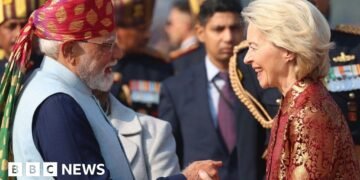
- Leaders’ Visit: European Commission President Ursula von der Leyen and European Council President António Costa traveled to Delhi, where the formal announcement is expected soon.
- Bilateral Summit: On Tuesday, the leaders are set to meet with Indian Prime Minister Narendra Modi to discuss the deal further, with an official signing anticipated later in the year.
- Market Access Improvements: The deal aims to enhance market access for Indian exports to Europe, while reducing barriers for European investments and goods entering India.
- Impact on Global Trade: Modi emphasized that the agreement represents a significant partnership between two major world economies, collectively accounting for a quarter of global GDP and a third of global trade.
Full Report
Details of the Agreement
The much-anticipated trade deal seeks to improve trade dynamics between India and the EU, facilitating better access for Indian goods in European markets and promoting European investments in India. Key areas of discussion included the automotive sector, agricultural products, and regulations surrounding carbon tariffs.
Leaders expressed that the deal sends a powerful political message endorsing trade agreements over tariffs, particularly as global protectionism rises. Costa noted that this reflects a commitment to a new global order, emphasizing cooperation instead of conflict in trade relations.
Recent Developments
The negotiation process resumed in July 2022 after stalling in 2013 due to challenges related to market access and regulatory demands. The agreement is seen as a response to rising economic pressures and is expected to benefit both regions significantly.
Modi remarked on the increasing relevance of such partnerships as India recently engaged in trade agreements with several other countries, including the UK, Oman, and New Zealand. The EU, for its part, has also reached new trade agreements, enhancing its networks and commercial reach.
Context & Previous Events
Trade discussions between India and the EU commenced in 2007 but experienced setbacks in 2013 due to unresolved market access issues. Recently, the political landscape has shifted, with both regions focusing on strengthening their trade ties in light of geopolitical pressures stemming from U.S. trade policies. The EU has recently faced its own trade challenges, notably with threats of escalation from former President Trump regarding trade disputes.
With this new trade deal, both India and the EU are aiming to secure alternative markets in response to increasing tariffs and economic friction, marking a notable turn in their international trade relationships.