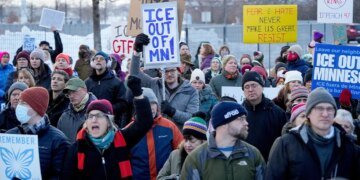























Escalating Tensions Surround ICE Operations in Minnesota: Outside Forces at Play
Violent confrontations involving Immigration and Customs Enforcement (ICE) agents in Minnesota are reportedly fueled by outside entities exploiting the unrest, rather than originating from organic protests. Adam Swart, CEO of Crowds on Demand, has raised alarms about the escalation of violence, warning that financial backers are promoting chaos for their own benefit.
Why It Matters
The situation in Minnesota underscores the increasingly volatile relationship between federal immigration enforcement and local activists. As protests intensify, understanding the underlying motivations of those participating—and the presence of potentially outside, vested interests—can illuminate the challenges facing community safety, law enforcement, and immigration policy.
Key Developments
- Adam Swart highlights that many aggressive agitators targeting ICE are financed by unidentified groups aimed at fostering chaos.
- Protests marked by obstruction of federal agents, personal threats, and doxxing campaigns against ICE personnel have escalated in the Twin Cities.
- Swart called for a tactical “cease-fire posture” from the Trump administration to help de-escalate tensions.
- Tom Homan, the White House border czar, has been deployed to oversee enforcement operations in response to the unrest.
Full Report
Concerns from Protest Insiders
Swart asserted that the most confrontational individuals targeting ICE are not grassroots activists but are motivated by financial incentives from hidden interests. He noted that law enforcement’s worries about the mounting violence are valid, pointing to the continued harassment of ICE agents as evidence of the situation’s deterioration.
Protest Dynamics and Their Implications
The protests have led to roadblocks, direct threats against ICE agents, and campaigns to expose their personal information, known as doxxing. Swart warned that such actions have created a cycle of increased aggression from both protesters and federal agents, further perpetuating the unrest.
Policy Recommendations for De-escalation
In light of the rising tensions, Swart suggested several reforms that could alleviate flashpoints between ICE and the community. These include the prioritization of deportations for criminal illegal immigrants, clearer sanctuary city policies, and requiring ICE personnel to be in easily identifiable uniforms and vehicles.
Administration’s Response
As protests continue, the Trump administration has shifted its strategy, with federal officials preparing to recalibrate enforcement efforts in Minnesota. Homan’s deployment signals a renewed focus on addressing the unrest that has gripped the region in recent days.
Context & Previous Events
The unrest has escalated in response to ICE enforcement actions in the Twin Cities, specifically following the fatal shooting of Renee Nicole Good by an ICE agent. Protests have become increasingly intense, emphasizing the contentious climate surrounding immigration enforcement in the region.






