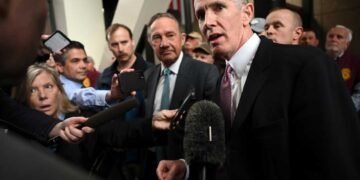























Chris Madel Exits GOP Gubernatorial Race Amid Controversy Over ICE Actions
Madel, a Republican candidate for Minnesota governor, has withdrawn from the race, citing his opposition to the Republican Party’s immigration policies and their impact on residents. His decision comes in the wake of recent tragic incidents involving federal agents in Minneapolis.
Why It Matters
Madel’s departure underscores a growing divide within the Republican Party regarding immigration enforcement and its repercussions on local communities. The intensified scrutiny of federal actions in Minnesota could reshape the political landscape, especially as gubernatorial candidates contend with the ramifications of national policies and local unrest.
Key Developments
- Chris Madel announced his exit from the gubernatorial race, expressing his inability to support the national Republican stance on immigration.
- He characterized the recently implemented Operation Metro Surge as a failure, saying it had strayed from its initial purpose.
- The political climate has become more charged following the fatal shootings of two U.S. citizens by federal agents during protests in Minneapolis.
- Several Republican leaders have echoed calls for a joint investigation into the incidents, emphasizing the need for transparency and accountability.
Full Report
Candidate’s Withdrawal
Chris Madel, a political newcomer and proponent of law enforcement, has concluded his campaign for Minnesota governor. In a video posted on X, he stated, "I cannot support the national Republicans’ stated retribution on the citizens of our state," marking a sharp rebuke of the party’s ongoing immigration policies and practices.
Formerly supportive of ICE’s local operations, Madel labeled the initiative known as Operation Metro Surge as "an unmitigated disaster." He expressed concern over the fear experienced by many U.S. citizens, particularly those from minority backgrounds, stating that people are now carrying documentation to prove their citizenship, which he deemed unacceptable.
Political Climate and Recent Events
Madel’s exit follows the recent killings of Alex Pretti and Renee Macklin Good, both of whom were U.S. citizens, during demonstrations regarding immigration enforcement. These incidents have intensified debates over the federal government’s tactics in urban areas.
Despite Madel’s withdrawal, the GOP field for Minnesota’s governorship remains competitive. Some candidates continue to defend current immigration policies, while others have voiced dissent regarding the Trump administration’s approach, emphasizing the need for collaboration between federal and state authorities.
Statements from Officials
In response to the ongoing turmoil, Senators Bill Cassidy and Thom Tillis have called for formal investigations into the incidents. Cassidy noted, "The events in Minneapolis are incredibly disturbing," and highlighted the importance of restoring credibility to federal agencies.
Senator Lisa Murkowski asserted that federal agents "do not have carte blanche" to take lethal action. She called for an independent inquiry into the recent shootings to help rebuild trust in law enforcement.
Concerns within the GOP
Many Republican leaders, including Oklahoma Governor Kevin Stitt, have expressed apprehensions about the Trump administration’s directives regarding immigration enforcement. Stitt remarked on the need for clear solutions and criticized the politicization of the issue.
On a related note, White House Press Secretary Karoline Leavitt reiterated the administration’s focus on deporting non-citizen criminals while expressing a commitment to minimize harm.
Context & Previous Events
Madel’s campaign began in December, with a focus on law enforcement support. His recent statements mark a departure from the party’s prevailing narrative on immigration strategy, especially in light of Governor Tim Walz’s announcement that he would not seek a third term amid allegations of social service fraud in Minnesota.
The situation in Minneapolis has drawn national attention and sparked debates on state-federal relations concerning immigration enforcement, as ongoing protests reflect broader societal tensions.






