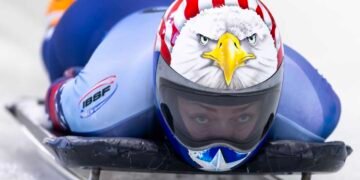























Controversy Erupts as Veteran Sled Racer Seeks Olympic Berth
Katie Uhlaender, a seasoned U.S. skeleton racer, is raising allegations of unfairness in the Olympic qualification process after claiming she was unjustly denied a chance to compete in her sixth Winter Olympic Games scheduled for next month in Milan Cortina. The 41-year-old athlete is calling on the International Olympic Committee (IOC) to establish a "wild card" berth to allow her to participate.
Why It Matters
Uhlaender’s situation underscores the complex and often contentious nature of Olympic qualifications. The integrity of sports is at stake as questions arise over the fairness of competition and the rules governing athlete selection, with broader implications for the ethics of international sports.
Key Developments
- Uhlaender competed in the Women’s Skeleton race at the IBSF World Championships in Lake Placid earlier this month.
- Due to a last-minute withdrawal of four Canadian athletes, Uhlaender received fewer qualifying points, jeopardizing her Olympic bid.
- The International Bobsleigh and Skeleton Federation (IBSF) ruled in favor of Canada, stating that the withdrawals did not constitute a violation of regulations.
- The U.S. Olympic and Paralympic Committee supports Uhlaender’s request but has confirmed that the IOC denied its appeal.
- Uhlaender has reached out to U.S. Vice President J.D. Vance for support in her quest.
Full Report
Aspirations for Olympic Participation
Katie Uhlaender, hailing from Breckenridge, Colorado, expressed her frustration on the platform X, stating that this situation challenges the core values of sportsmanship. She asserted, "This is about the integrity of sport and code of ethics that upholds sportsmanship, fair play, integrity, respect and community."
During a recent competition in Lake Placid, head-to-head heats were contested by various international athletes. Uhlaender performed well and seemed poised to accumulate enough points for Olympic qualification. However, the unexpected withdrawal of the Canadian sledders significantly impacted her total points, subsequently affecting her standing.
Review and Outcomes
Initial inquiries into the Canadian team’s actions prompted a review by the IBSF. Despite the concerns raised, including accusations of potential manipulation, the federation ultimately sided with Canada, declaring that no misconduct took place. The decision left Uhlaender’s point total unchanged and her Olympic aspirations in jeopardy.
During a news conference on January 15, Rocky Harris, the chief of sport for the U.S. Olympic and Paralympic Committee, communicated the organization’s backing of Uhlaender’s situation, but clarified that the IOC had upheld the IBSF’s ruling.
Response from Canadian Officials
David Shoemaker, head of the Canadian Olympic Committee, dismissed the allegations as unfounded, emphasizing that the integrity of Canada’s skeleton program should not be questioned.
Despite the ruling, Uhlaender remains hopeful that the IOC may reconsider its decision. She publicly urged Vice President Vance to advocate on her behalf as the opening ceremony approaches.
Context & Previous Events
- Uhlaender has participated in Olympic skeleton events since the 2006 Winter Games.
- The IBSF’s ruling on January 15 solidified the involvement of international sports officials and the scrutiny surrounding qualification procedures.
Uhlaender’s push for a special berth reflects broader tensions within Olympic sports, leaving athletes and officials navigating a murky landscape of rules and fairness as they approach the Winter Olympics.






