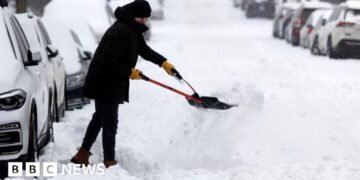























Dangerous Winter Storm Sweeps Across the U.S., Leaving Destruction and Casualties
A severe winter storm has unleashed chaos across the United States, resulting in at least seven fatalities and widespread power outages impacting hundreds of thousands of homes. The hazardous conditions, described as “life-threatening,” have forced numerous schools and roads to close and led to the cancellation of over 11,000 flights as the storm stretches from Texas to New England, according to the National Weather Service (NWS).
Why It Matters
This unprecedented winter storm poses significant risks to public safety and infrastructure, affecting millions of Americans. The combination of heavy snowfall, sleet, and freezing rain presents challenges for recovery efforts, particularly in regions unaccustomed to such severe winter weather. Understanding the implications of this storm is vital for communities, emergency responders, and public officials as the nation braces for continued disruptions.
Key Developments
- At least seven fatalities linked to the storm have been reported across multiple states, including Louisiana, Texas, Tennessee, and Kansas.
- More than 800,000 households are without power, affecting daily life and emergency response capabilities.
- Over 11,000 flights have been canceled, causing travel disruptions nationwide.
- Major weather emergencies have been declared in nearly half of U.S. states, including Washington, D.C.
- Cities in the northeast and southern states are experiencing extreme cold far below seasonal averages.
Full Report
Impact and Reactions
As temperatures plummet to 15-20°C below the usual winter average in states like Texas and Louisiana, the National Weather Service warns residents to remain indoors. The storm has already resulted in fatalities; two men in Louisiana succumbed to hypothermia, and additional deaths have been reported in Texas, Tennessee, and Kansas. New York City Mayor Zohran Mamdani noted that at least five individuals in the city died over the weekend, although their exact causes of death are still being investigated.
In Austin, Texas, Mayor Kirk Watson confirmed an “exposure-related” death connected to the harsh weather. Meanwhile, Louisiana’s Department of Health indicated that freezing conditions are primarily responsible for the fatalities. Governor Kathy Hochul of New York emphasized the severity of the storm, describing it as the “coldest winter storm we’ve seen in years,” and warned residents to stay safe indoors.
Widespread Disruptions and Emergencies Declared
With forecasts indicating that the storm could affect approximately 180 million Americans, and that recovery from the snow and ice could be prolonged, emergencies have been declared in several states, bringing a halt to many daily activities. Schools across the nation are canceling classes in anticipation of continued severe weather. Washington Mayor Muriel Bowser described the conditions in the capital as the biggest snowstorm in a decade.
Nature of the Storm
Weather experts attribute the storm’s severity to the polar vortex—a concentrated band of cold air that typically hovers over the Arctic. When the polar vortex weakens, cold air can move southward, resulting in unprecedented weather events in southern states. The current storm’s trajectory indicates that while it may clear from the Canadian maritime regions by Tuesday, dangerously low temperatures are expected to persist into early February.
Context & Previous Events
Historically, the northern states, such as the Dakotas and Minnesota, are familiar with extreme winter weather, while regions in the south are not. This storm serves as a stark reminder of climate variability, including the potential influence of climate change on weather patterns, particularly those affecting the polar vortex.