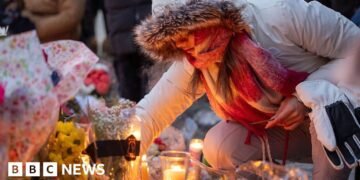























Tensions Escalate in Minneapolis Following Fatal Shooting by ICE Agents
Amid growing unrest in Minneapolis, protests erupted over the weekend in response to the fatal shooting of 37-year-old nurse Alex Pretti by federal immigration agents. Minnesota Governor Tim Walz characterized the nation as being at a critical juncture, urging President Donald Trump to withdraw federal agents from the city amid escalating calls for accountability.
Why It Matters
This incident has intensified debates around immigration enforcement, the Second Amendment, and police practices in the U.S. It highlights a fracturing relationship between state and federal authorities, as well as mounting public pressure against federal immigration policies, which some argue disproportionately target marginalized communities.
Key Developments
- Protests have spread to multiple U.S. cities, with demonstrators calling for justice and an end to ICE operations.
- President Trump has demanded that state officials cooperate with federal immigration enforcement, while also suggesting he may withdraw ICE agents from the Minneapolis area in the future.
- Governor Walz and Minneapolis Mayor Jacob Frey face scrutiny over their handling of the aftermath of the shooting.
- The FBI is conducting an investigation into Pretti’s death, with conflicting accounts about the circumstances surrounding the incident.
- A coalition of over 60 Minnesota businesses has urged for "immediate de-escalation" of tensions and calls for collaboration between local and federal officials.
Full Report
Protests Erupt
On Sunday, hundreds of protesters gathered in Minneapolis, braving frigid temperatures to express their outrage over Pretti’s death. Videos circulating on social media depicted armed federal agents using tear gas and stun grenades against peaceful demonstrators. Signs proclaiming "Justice for Alex" and calling to "abolish ICE" were prominently displayed as the protests spread to cities including New York, Chicago, and San Francisco.
Federal and Local Government Responses
President Trump, in an interview with the Wall Street Journal, criticized Governor Walz and Mayor Frey for resisting federal authorities and labeled Pretti as a "domestic terrorist." He called for the extradition of "Criminal Illegal Aliens" from state facilities and suggested that further cooperation between local and federal entities was vital.
In contrast, local leaders such as Minneapolis Police Chief Brian O’Hara stated that state officers were impeded from investigating the shooting due to federal agents blocking access to the scene, complicating ongoing law enforcement efforts. His sentiments echoed wider frustrations regarding the relationship with federal immigration enforcement.
Conflicting Narratives
While Homeland Security Secretary Kristi Noem contended that Pretti was shot while "brandishing" a gun, local officials revealed that he was legally permitted to carry a firearm and wasn’t actively threatening anyone at the time of the confrontation. Eyewitness accounts and the victim’s family have rejected the federal account, asserting that Pretti was holding a phone, not a weapon.
Broader Political Implications
The backlash against the Trump administration’s immigration policies extends into his own party, with Republican lawmakers expressing concern over the operation tactics employed by federal agents. Oklahoma Governor Kevin Stitt and Louisiana Senator Bill Cassidy have both voiced their apprehensions regarding the implications of the use of force in these operations.
As protests continue unabated, lawmakers are contemplating significant shifts in immigration policy, particularly with threats from Democrats to block critical funding if it supports the Department of Homeland Security.
Context & Previous Events
This shooting comes on the heels of a similar incident involving federal agents in January, which resulted in the death of Renee Good, further fueling tensions between Minnesota authorities and federal immigration enforcement. The Trump administration has taken a hard stance on immigration in Minnesota following fraud convictions related to state welfare programs involving some members of the Somali community, raising the stakes for both residents and federal operations alike.






