






















Tensions Rise Between U.S. and Canada Over Trade Policies
U.S. President Donald Trump has escalated rhetoric against Canada, threatening a 100% tariff on Canadian imports if the nation advances its trade agreement with China. This move signals heightened tensions in relations already strained by differing approaches toward international trade and diplomacy.
Why It Matters
This spat underscores the fragile nature of U.S.-Canada relations and the broader implications for trade, particularly as Canada navigates a complex relationship with China amid Trump’s increasingly aggressive stance. The potential tariffs could jeopardize billions in trade and complicate supply chains essential to both economies.
Key Developments
- Trump threatened a 100% tariff on Canadian goods if Canada continues its trade deal with China.
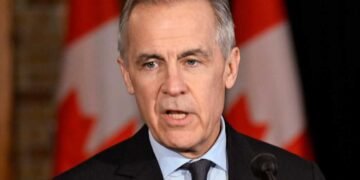
- In a social media post, Trump criticized Prime Minister Mark Carney for allegedly turning Canada into a "drop-off port" for Chinese goods.
- Carney’s office has not publicly responded to the tariff threat.
- Disagreements between Trump and Carney have intensified as Trump continues to provoke Canada over sovereignty matters, including a controversial suggestion to absorb Canada as a U.S. state.
- Carney has taken a leading stance in promoting a united response among "middle powers" to counter U.S. trade policies.
Full Report
Trade Tensions Heighten
In a provocative statement on social media, Trump warned that if Canada’s Prime Minister Mark Carney pursued a trade agreement with China, it would lead to "devastating" tariffs on Canadian imports. This is reflective of the broader trade war rhetoric that has characterized Trump’s administration. Earlier this month, Canada secured a deal to reduce tariffs on Chinese electric vehicles in exchange for lower tariffs on Canadian agricultural products, which initially garnered Trump’s approval.
However, Trump’s tone shifted dramatically, culminating in the latest threats as he accused Carney of facilitating Chinese access to the U.S. market. "If he thinks he is going to make Canada a ‘Drop Off Port’ for China… he is sorely mistaken," Trump declared.
Strained Diplomatic Relations
These tensions come amidst a backdrop of strained NATO relations, exacerbated by Trump’s peculiar interest in acquiring Greenland and his insistence that Canada should consider being absorbed as a U.S. state. Carney, acknowledging the complexities of Canada-U.S. relations, asserted that Canada has its own voice on the world stage and does not need to conform to autocratic influences. His comments were made alongside Trump’s remarks at the World Economic Forum in Davos, where Trump claimed that "Canada lives because of the United States."
In a direct response to the escalating conflict, Trump also withdrew Carney’s invitation to join his "Board of Peace," designed to address global issues, further diminishing diplomatic ties.
Economic Implications
Currently, Canadian exports to the U.S. play a crucial role in both economies, with about $3.6 billion in goods crossing the border daily. A significant portion of U.S. energy imports—approximately 60% of crude oil and 85% of electricity—originates from Canada. Trump’s threats could disrupt these vital economic relationships, particularly considering the historical reliance of U.S. states on Canadian exports.
Context & Previous Events
In the past year, Trump has consistently engaged Canada in a trade war, imposing tariffs on various sectors. The Canada-U.S.-Mexico Agreement has provided some buffer against these pressures, yet it is set for review later this year. Earlier tensions also saw the province of Ontario running an advertising campaign in the U.S. against tariffs, prompting a temporary cessation of trade negotiations.
Historically, Canada has mirrored U.S. policies, including imposing tariffs on Chinese goods, but as U.S.-China tensions grow, Canada has started redefining its foreign policy, seeking to enhance relations with China despite ongoing concerns regarding human rights issues.






