






















Iranian Protests Escalate Amidst Deadly Crackdown and Internet Blackout
Protests in Iran have spiraled into violent confrontations, as security forces deploy live ammunition against demonstrators. Witnesses report scenes of chaos and bloodshed in the city of Isfahan, highlighting the urgent need for international attention amid a three-week government-imposed internet blackout.
Why It Matters
The ongoing protests, ignited by a severe economic crisis, represent a significant challenge to the Iranian government. The violent response from security forces not only raises human rights concerns but also underscores the desperation among citizens who are risking their lives to voice dissent. The global community is called upon to respond to the escalating crisis, as the silence may imply complicity in the government’s actions against its own people.
Key Developments
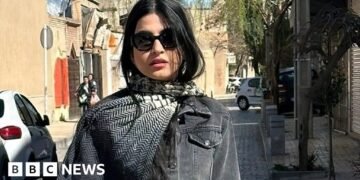
- Witness Parnia, visiting Isfahan, described a neighborhood transformed into a war zone as security forces fired on crowds.
- Protesters openly chanted anti-government slogans, urging the downfall of the Supreme Leader Ayatollah Ali Khamenei.
- The government has enacted a sweeping internet blackout for three weeks, hampering the flow of information about the unrest.
- Health reports indicate that hospitals are overwhelmed with injured individuals, many suffering from birdshot wounds.
- Human rights groups estimate over 4,600 deaths due to the crackdown, contrasting sharply with official government figures.
Full Report
A Gripping Firsthand Account
Parnia, who resides in London, was with her family in Isfahan when protests erupted following widespread unrest in Tehran. She noted that within days, as many as 300 protesters were gathered in local neighborhoods, united in their anger over the collapsing economy. Parnia recounted chilling scenes as security forces initially unleashed tear gas, followed by live ammunition targeted at demonstrators. “I saw people getting shot and falling down, and I saw blood on the street,” she stated. Many protesters, including men and women spanning various age groups, shouted slogans such as “Death to the dictator.” This reference was directed at Khamenei, reflecting the deep frustration felt by ordinary citizens.
The Violent Response
Videos verified by international media showed significant numbers of protesters, some attempting to shield themselves with traffic sign poles and metal sheets. Witnesses described a total breakdown of order as gunfire rang out, punctuating the atmosphere of fear. Following a speech from Khamenei, in which he dismissed the protesters as “destructive elements,” the Revolutionary Guards sent widespread warnings to citizens, aiming to deter further gatherings.
Health Concerns Amid Chaos
Healthcare facilities were overwhelmed with injured protesters, leading many to refuse hospital treatment for fear of arrest. Parnia recounted witnessing the chaotic scene of a local clinic, where staff could only stabilize wounds before sending countless injured individuals home. “Every time you go out into the streets, you see random people with eye patches,” she relayed, indicating the severity of injuries sustained from the protests.
Following her experience, Parnia made her way to Tehran to return to the UK. Despite a busy airport and cancelled flights, she managed to board an Iranian airline to safety. Meanwhile, the health crisis continues to escalate; reports indicate medical teams at hospitals are being monitored by state officials and many injured individuals are reportedly developing infections.
Context & Previous Events
The protests and subsequent crackdowns underscore a history of unrest in Iran, particularly during times of economic instability. Previous protests have also been met with significant government force, but the scale and severity of the current violence mark a troubling escalation. Human rights organizations remain concerned as the death toll gathers pace, with many activists fearing that true figures may be even higher than official accounts suggest.






