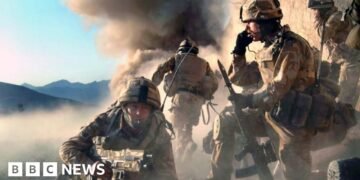























Twenty Years in Afghanistan: A Retrospective on Service and Sacrifice
The two-decade involvement of U.S. and allied forces in Afghanistan, which commenced in the aftermath of the 9/11 attacks, has left an indelible mark on military personnel and civilians alike. As America reflects on this turbulent chapter, the narratives of those who served highlight not only the hardships but also the resilience exhibited in the face of relentless violence and uncertainty.
Why It Matters
The United States’ engagement in Afghanistan represents a significant geopolitical shift post-9/11 and illustrates the lengths to which nations will go to support allies under threat. Understanding this history is crucial for recognizing the implications of military actions, the sacrifices made by service members and their families, and the complex legacy of international partnerships forged in times of crisis.
Key Developments
- The initiation of military action in Afghanistan followed the September 11 attacks in 2001, marking the first invocation of NATO’s Article 5.
- The Taliban were quickly removed from power, leading to ongoing efforts to hunt down al-Qaeda operatives.
- The years immediately following the invasion saw a decrease in attention from U.S. forces, with Afghanistan often dismissed as "Op Forgotten."
- In 2006, combat intensity increased significantly, particularly in Helmand province, leading to heightened engagements and casualties.
- The conflict saw the introduction of sophisticated tactics by the Taliban, including the use of IEDs, resulting in devastating injuries among soldiers.
Full Report
Early Years of Conflict
The U.S. military’s entrance into Afghanistan began with a focus on dismantling al-Qaeda, which was using the country as a refuge. In a short span, the Taliban were ousted from leadership, with U.S. troops rapidly adapting to a hostile environment, marked by the threat of surface-to-air missiles during transport flights.
Rising Tensions and Casualties
Despite an initial calming of hostilities in the early years, situations deteriorated as focus shifted to the Iraq War. By 2006, the UK’s deployment to Helmand province spurred a violent counteroffensive from the Taliban, catching both military leaders and service members off guard. The conditions proved fraught, with British soldiers often in situations labeled "danger close," and persistent fears from soldiers centered on hidden IEDs posing lethal risks with each mission.
Enduring Legacy of Service
The bravery observed in Afghanistan was not limited to American forces; contributions came from allied nations, including British and Canadian troops, as well as the Afghan fighters who endured immense sacrifice throughout the conflict. The psychological and physical toll on all those involved remains a point of discussion, as many soldiers faced life-altering injuries from IEDs, resulting in significant adjustments to their lives post-deployment.
The resolve of veterans and survivors to rebuild their lives in the face of adversity serves as a poignant reminder of the enduring human spirit, which continues to resonate in the aftermath of a complex military engagement.
Context & Previous Events
The U.S. military operation entered a new phase under "Operation Enduring Freedom," launched shortly after 9/11. The initial goal was to eliminate the terrorist threat posed by al-Qaeda, which resulted in the Taliban’s swift removal. However, as U.S. focus shifted, the realities of combat fluctuated, revealing enduring challenges in pacifying the region. The deployment to Helmand province in 2006 marks a significant turn in tactics and firepower, leading up to the eventual cessation of combat operations in 2014.