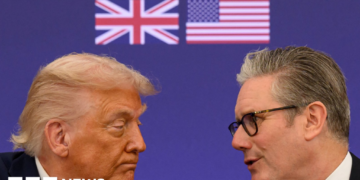























Starmer Calls Trump’s Comments on NATO Troops "Insulting and Appalling"
The controversy surrounding former President Donald Trump’s recent remarks about NATO troops in Afghanistan has drawn sharp rebuke from British political leaders, notably Sir Keir Starmer, the head of the UK Labour Party. Starmer labeled Trump’s comments as "insulting and frankly appalling," given the historical context of British military sacrifices in the war.
Why It Matters
Trump’s statements come at a time when sensitivity to the sacrifices made by allies in international conflicts is heightened. The UK suffered 457 military deaths in Afghanistan, making the remarks a deeply personal issue for many British families and a significant moment in US-UK relations. Starmer’s response highlights the fragility of transatlantic ties that have been under strain due to Trump’s previous criticisms of NATO.
Key Developments
- Outrage Over Trump’s Comments: Trump claimed that NATO allies, including the UK, remained "off the front lines" during the Afghanistan conflict, dismissing their contributions.
- Starmer’s Reaction: In a strong condemnation, Starmer emphasized the bravery and sacrifice of British forces, noting the emotional toll on families affected by the war.
- Bipartisan Condemnation: Political leaders from across the UK admonished Trump, with Conservative leader Kemi Badenoch and Liberal Democrat leader Ed Davey also criticizing his remarks.
- Calls for Apology: Starmer and family members of injured soldiers are urging Trump to apologize for his comments, which have been described as disrespectful to those who served.
- White House Stance: While the White House reaffirmed Trump’s perspective on NATO spending, they have not addressed the immediate backlash from UK leaders.
Full Report
Starmer’s Condemnation
Sir Keir Starmer articulated his condemnation during an interview, stating that if he had "mispoken in that way," he would "certainly apologize." His comments reflect a broader sentiment within the UK regarding the shared sacrifices made during the Afghanistan conflict, particularly in light of 457 British fatalities.
Starmer acknowledged the lasting impact of these sacrifices, including life-altering injuries sustained by many veterans. He expressed empathy for the families affected by the war, underscoring that Trump’s words have aggravated their pain.
Responses from Veterans
British veterans have joined the chorus of criticism directed at Trump. Cpl. Andy Reid, who lost both legs and his arm in Afghanistan, expressed his own anger at the remarks, countering Trump’s claims by asserting that British forces were indeed on the front lines alongside their American counterparts. Diane Dernie, whose son Ben Parkinson suffered severe injuries during his service, condemned Trump’s comments as indicative of "a childish man trying to deflect from his own actions."
Political Reactions
The reaction to Trump’s statements has spanned the political spectrum in the UK. Kemi Badenoch labeled Trump’s comments a disgrace, highlighting the families of young men who lost their lives in the conflict. Sir Ed Davey pointed out that Trump himself avoided military service during the Vietnam War, challenging his credibility on issues of military sacrifice.
Reform UK leader Nigel Farage also condemned Trump’s remarks, stating that British forces had fought valiantly in Afghanistan for two decades alongside their American allies.
White House Comments
In response to the fallout, the White House maintained its support for Trump’s long-held views about NATO, asserting that America bears a disproportionately large share of NATO’s financial responsibilities. A statement reaffirmed Trump’s perspective but did not address the specific outrage expressed by UK leaders and veterans.
Context & Previous Events
The NATO mutual defense clause, triggered following the September 11, 2001 attacks, led to the US-led invasion of Afghanistan aimed at dismantling the Taliban regime that harbored terrorists. The conflict resulted in significant casualties, including over 3,500 coalition soldiers, with the UK suffering the second-highest military deaths. As of 2021, lawmakers and veterans have continued to critically assess the long-term implications and sacrifices associated with the war.