






















Trilateral Peace Talks Scheduled Amidst Ongoing Tensions in Ukraine
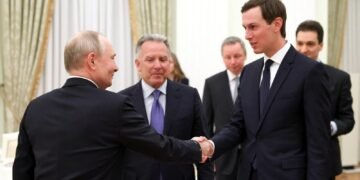
The Kremlin has confirmed that the first trilateral peace talks involving the United States, Ukraine, and Russia will occur today in Abu Dhabi. This announcement follows a meeting between Russian President Vladimir Putin and Donald Trump’s peace envoy, Steve Witkoff, alongside Trump’s son-in-law, Jared Kushner, in Moscow earlier this week.
Why It Matters
The outcome of these talks could have significant implications for the ongoing conflict in Ukraine and regional stability. As discussions evolve, the engagement of major international players highlights the complexities of negotiating peace amid entrenched positions regarding territorial disputes. Achieving a sustainable resolution will require navigating these contentious issues.
Key Developments
- The Kremlin confirmed Russian attendance at the meetings, noting previous discussions between Putin and U.S. officials.
- Moscow described the initial talks as "exceptionally substantive," although it remains skeptical about the possibility of a breakthrough.
- Ukrainian President Volodymyr Zelenskyy indicated that the trilateral meeting was a late-arranged initiative from Washington, following his interactions with Trump at the World Economic Forum in Davos.
- Ukraine will send its chief negotiator Rustem Umerov and Chief of Staff Kyrylo Budanov to the talks, while Russia has designated Admiral Igor Kostyukov to lead its delegation.
- The discussions are revisiting what was proposed at last year’s summit in Alaska, which explored territorial compromises in exchange for peace.
Full Report
Diplomatic Movements
The announcement of peace talks comes after four hours of discussions in Moscow deemed “constructive and trustworthy” by the Kremlin. Russian officials reiterated that any long-lasting resolution would hinge on the settlement of territorial disputes, referencing a consensus reached during the Trump-Putin summit in Alaska. Moscow has indicated that it will continue military operations until a diplomatic solution is achieved.
Zelenskyy’s Concerns
President Zelenskyy has expressed frustration with European allies for what he perceives as a lack of decisive action in supporting Ukraine. His recent remarks at Davos resonated with sentiments of urgency, reminiscent of previous calls for European self-defense capabilities. Ursula von der Leyen, the President of the European Commission, countered by asserting that the European Union has provided extensive support over the past four years and justified the commitment of additional funding for Ukraine.
Focus on Territorial Disputes
Zelenskyy’s remarks signal a pivotal moment for Ukraine as it enters these talks with a strong focus on preserving its territorial integrity. While Moscow seeks concessions regarding the eastern regions of Donetsk and Luhansk, which are critical for Ukraine’s defense, Zelenskyy maintains a firm stance against any territorial compromises that could enable further Russian advances.
Context & Previous Events
During last year’s summit in Alaska, no formal agreements were reached, but proposals circulated regarding Ukraine potentially ceding territory to end hostilities. Reports indicated that Russia aimed to gain control over the eastern Donetsk and Luhansk regions. Historically, Ukraine has resisted such proposals, viewing them as detrimental to its national security and sovereignty.