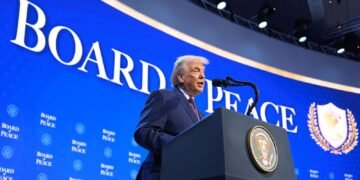























Trump’s Board of Peace Expands Its Vision Beyond Gaza
President Donald Trump’s newly formed Board of Peace is taking a broader stance than initially anticipated, signaling a shift from a singular focus on Gaza to a more comprehensive approach to various international challenges. The implications of this evolving perspective are profound, as the board appears poised to redefine not only the future of Gaza but also the landscape of global diplomacy.
Why It Matters
This expansion of the Board of Peace is significant given the changing dynamics of international relations and the ongoing challenges posed by the United Nations. As criticisms of the UN’s efficacy gain traction, particularly from nations like Israel, the Board of Peace could emerge as a controversial alternative, one that reframes international development as an investment opportunity rather than a humanitarian aid dependency.
Key Developments
- Initial Meeting: Jared Kushner, Trump’s son-in-law and chief negotiator, unveiled his vision for Gaza, proposing a shift from humanitarian aid to entrepreneurial investment.
- Contrasting Realities: Kushner’s vision contrasts sharply with the current dire living conditions in the region, raising questions about the feasibility of such an ambitious plan.
- UN Relationship: Israel’s contempt for the UN and its decision to demolish UNRWA’s Jerusalem headquarters underscore shifting allegiances and critiques of established institutions.
- Board Membership: The board currently consists primarily of Trump’s allies, yet its future composition could dramatically alter international dynamics.
Full Report
Expanding Ambitions
Four months ago, the concept of the Board of Peace seemed closely tied to resolving the ongoing issues in Gaza. However, at a recent gathering in Davos, board members revealed a more expansive mission that includes broader geopolitical considerations. Kushner emphasized the need to view Gaza not merely as a warzone, but as an opportunity for economic revitalization through investment.
The Dichotomy of Vision and Reality
Kushner’s presentation showcased grand aspirations for transforming Gaza into a thriving economic hub. Yet, it starkly differed from the current reality, where many residents grapple with inadequate shelter amid widespread destruction. The juxtaposition raises skepticism about the practical application of such visionary proposals.
Challenging Established Institutions
The formation of the Board of Peace also raises questions about its role in relation to the United Nations. With the UN facing increasing scrutiny over its effectiveness, particularly in the context of Israeli-Palestinian relations, Trump’s board may be positioned as a challenging rival. Israeli officials have expressed a preference for negotiations with the U.S. administration over the UN, which they see as compromised.
Potential for a New Diplomatic Landscape
The board’s composition, primarily composed of those aligned with Trump’s administration, suggests it could serve as a platform for reshaping alliances. Should nations like Russia, India, or China join, the board could significantly shift global power dynamics, akin to a secretive network influencing international policies.
Context & Previous Events
The establishment of the Board of Peace comes in the wake of ongoing tensions in Gaza and a long history of criticism directed at the UN. Israel’s actions this week to dismantle the UNRWA building in Jerusalem exemplify rising tensions as the country seeks to distance itself from UN influence. The UN Secretary-General has acknowledged the organization’s struggles to maintain its authority in global diplomacy, highlighting the precarious nature of its role in future peace negotiations.