






















Trump Abandons Tariff Threat as EU Summit Looms
President Donald Trump announced that he will not impose the 10% tariffs previously threatened against several European nations, claiming that a deal concerning the future of Greenland has brought satisfaction among NATO allies. The shift in stance comes as an emergency European Union leaders summit is set to convene in Brussels today.
Why It Matters
Trump’s decision to scrap the tariffs not only eases tensions between the U.S. and its European allies but also highlights the volatile nature of international relations in the current administration. The potential economic consequences of a trade war alongside military ambitions in the Arctic raised concerns among traditional allies, who have been increasingly vocal in their opposition.
Key Developments
- Trump announced on social media that European leaders are “very happy” with a proposed framework for a deal regarding Greenland.
- The U.S. president met with NATO chief Mark Rutte, calling the conversation “very productive.”
- Details of the agreement remain unclear, with no formal documentation signed yet.
- The EU leaders’ summit today will continue as planned, even in light of Trump’s latest announcement.
- Trump assured that force would not be used in the U.S. pursuit of Greenland but emphasized that military capabilities are robust.
Full Report
Trump’s Change of Heart
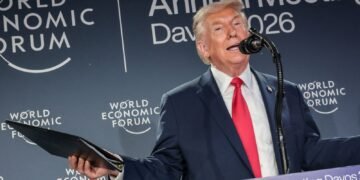
During a speech at Davos, Trump confirmed he would retreat from the earlier tariffication threat directed at eight European countries, including the United Kingdom. This policy shift follows a significant backlash from European leaders concerning what many viewed as overreach in his ambitions for Greenland, a territory governed by Denmark.
On his social media platform, Truth Social, Trump expressed optimism about the implications of the discussions on Greenland for both the U.S. and its NATO partners. He stated that a long-term agreement is being shaped but declined to share specific details, indicating that more conversations are needed.
Reactions and Context
The president’s earlier threats had provoked a rare moment of unity among European leaders, who conveyed their resolute stance that Greenland is not for sale. In the U.K., prominent political figures, regardless of party affiliation, had expressed open hostility toward Trump’s claims, criticizing them as contrary to international expectations.
As a backdrop for these developments, earlier on Sunday, Trump had declared his intention to impose broad tariffs on goods from European nations as part of his strategy. This policy threatened to escalate into a significant trade conflict, provoking a stronger-than-expected response from NATO allies.
Context & Previous Events
The geopolitical landscape has been strained as Trump’s administration continues to navigate complex diplomatic relations with European allies. In the days leading up to Trump’s announcement, NATO allies had complied with calls to increase their military contributions. However, Trump’s ambitions regarding Greenland created a divide that united various leaders in opposition, further complicating U.S.-EU relations.
The EU summit, organized to address potential retaliation against the tariffs, represents a crucial moment for leaders to reassess their strategy moving forward, particularly in light of the president’s latest comments.