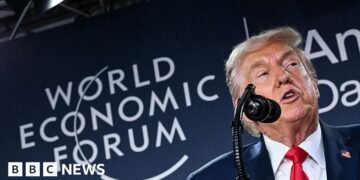























Trump’s Davos Address Sparking European Backlash
President Donald Trump’s recent speech at the World Economic Forum in Davos, Switzerland, has stirred significant controversy, provoking a backlash from European leaders. His remarks, which many perceived as disparaging and historically inaccurate, reveal the underlying tensions in U.S.-European relations and raise questions about collaboration moving forward.
Why It Matters
The statements made by Trump during the summit not only underscore heightened diplomatic tensions between the U.S. and Europe but also reflect ongoing challenges in NATO cooperation and trade relations. As the EU prepares for its emergency summit, the stakes are high for maintaining transatlantic alliances amidst growing frustration over U.S. policy.
Key Developments
- Trump claimed that without U.S. intervention during World War II, Europeans would be speaking German, a statement that some found historically insensitive.
- He suggested that Europe is heading down the wrong path, a recurring theme in his rhetoric, which has taken on additional weight when voiced directly to European partners.
- In a surprising turn, Trump announced he would not follow through with a tariff threat against eight European nations, which had created unease among EU leaders.
- Danish Foreign Minister Lars Løkke Rasmussen framed Trump’s remarks as maintaining his ambitions, despite the tension surrounding Greenland’s sovereignty.
- Following Trump’s remarks, Greenland’s government issued a brochure advising residents on crisis management, underlining the local concern regarding U.S. interests.
Full Report
Trump’s Contentious Remarks
During his keynote speech, Trump asserted that without U.S. military intervention, Europe would not be where it is today. His comment about the German language caught the attention of many, given that German is one of the four official languages in Switzerland. Europeans were quick to criticize his statements, deeming them both overbearing and misinformed, especially as the forum provided a platform for dialogue among allies.
Greenland Focus
While the forum provided an opportunity to reaffirm cooperative security efforts, Trump’s controversial stance regarding Greenland overshadowed discussions. He reiterated his interest in acquiring the island, framing it as a reasonable transaction based on historical U.S. military support during World War II. Nonetheless, the Kingdom of Denmark maintains that Greenland is not up for sale, which complicates any potential negotiations.
Responses from European Leaders
European leaders expressed palpable frustration at Trump’s comments, particularly citing his disparaging remarks about Denmark’s historical military failures. Notably, Trump caricatured French President Emmanuel Macron, focusing on his sunglasses and delivery style. Despite professing a fondness for Macron, the joke failed to resonate with the broader audience.
Trump’s retreat from imposing tariffs was momentarily viewed as a relief, but the ambiguity regarding his discussion with NATO Secretary-General Mark Rutte leaves European nations seeking clarity. The EU’s emergency summit will likely address these complexities, potentially easing tensions but raising demands for more reliable engagement from the U.S.
Context & Previous Events
Prior to the Davos summit, European leaders had been attempting to manage relations with the Trump administration as trade tensions escalated. The tariffs on European goods had been a contentious point, igniting discussions around trade agreements and military commitments. Denmark’s involvement in NATO operations, particularly alongside U.S. forces in Iraq and Afghanistan, adds historical context to current bilateral discussions regarding military support and solidarity.






