






















U.S. Transfers Up to 7,000 ISIS Detainees to Iraq Amid Syrian Ceasefire
The U.S. military has commenced a transfer of up to 7,000 detainees affiliated with the Islamic State group from prisons in northeastern Syria to Iraq. This operation is prompted by a new ceasefire agreement that has shifted control in the region to the Syrian government.
Why It Matters
This development highlights the fragility of security in northeastern Syria as the balance of power changes. The transfer aims to mitigate the risk of potential prison breaks and consolidates the position of the Syrian government, which has long sought to reassert authority over regions previously governed by Kurdish-led forces.
Key Developments
- The U.S. Central Command confirmed the initial transfer of 150 ISIS fighters from Hassakeh province to a secure location in Iraq.
- Admiral Brad Cooper of CENTCOM discussed the transfers with Syria’s newly appointed president Ahmed al-Sharaa, emphasizing a stable ceasefire environment.
- Human rights organization Reprieve raised concerns about the fate of detainees transferred to Iraq, warning of potential torture and execution.
- Despite the ceasefire, clashes continued, with the Syrian defense ministry reporting the deaths of seven soldiers from a drone attack in Hassakeh.
- The SDF claimed it lost control of a prison following violent confrontations with the Syrian government forces, leading to a significant escape of detainees.
Full Report
Transfer Operations
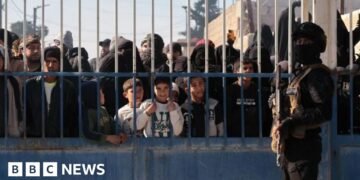
The U.S. military has initiated the transfer of detainees as a precaution against the possibility of breakouts and regrouping. While the initial movement involved 150 fighters, the total could rise dramatically as authorities assess the situation in the region. Syrian government forces now oversee large areas of northeastern Syria, as the Syrian Democratic Forces (SDF) have withdrawn from key locations, including detention facilities housing thousands of ISIS affiliates and their families.
Concerns About Detainee Treatment
Rights group Reprieve cautioned that detainees sent to Iraq may face severe human rights abuses, urging the UK to ascertain if any British nationals are among them. The organization estimates fewer than 10 British men are held in these prisons, while approximately 55 to 60 British nationals, the majority being children, remain detained across the broader region.
Ongoing Violence
While a ceasefire has been established, reports of violence persist. The Syrian defense ministry indicated that a drone attack led to the deaths of seven soldiers, which it condemned as a violation of the ceasefire. On the other hand, the SDF denied involvement and claimed that government forces initiated attacks in areas like Kobane, instigating further tensions.
Prison Break and Fugitives
After a recent prison break at Shaddadi, approximately 120 ISIS members escaped, prompting swift action from Syrian special forces, who recaptured 81 fugitives. The SDF has reported that around 1,500 ISIS members may have fled during the unrest, raising alarms about a potential security crisis.
Context & Previous Events
The SDF, previously instrumental in the U.S.-led campaign against ISIS during Syria’s prolonged civil war, has detained around 12,000 ISIS members, along with tens of thousands of their relatives in various camps across northeastern Syria. The recent shift in power dynamics has been characterized by the SDF’s weakening ties with U.S. forces. U.S. special envoy Tom Barrack stated that the alliance with the SDF has “largely expired,” indicating a focus on securing detention facilities moving forward.