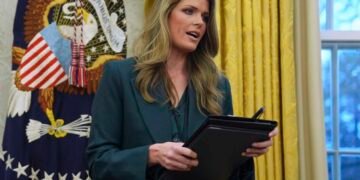























Halligan Out as Federal Prosecutor Amid Legal Controversies Over Indictments
A significant shakeup in federal prosecutorial leadership has occurred as Lindsey Halligan, appointed by President Trump, exits her interim position in the Eastern District of Virginia following legal disputes regarding her legitimacy. This development comes after her controversial role in the prosecutions of former FBI Director James Comey and New York Attorney General Letitia James, both of whom now face indictment.
Why It Matters
Halligan’s departure not only halts the ongoing legal actions against high-profile figures but also raises questions about the legal processes surrounding interim U.S. attorney appointments. The ruling from federal judges underscores the complexities of proper appointment protocols and the potential implications for justice system integrity under politically influenced appointments.
Key Developments
- Lindsey Halligan was appointed by President Trump as interim U.S. attorney for the Eastern District of Virginia on September 21, 2025.
- Her appointment followed the resignation of Erik Siebert, who departed under pressure linked to calls for criminal charges against James Comey and Letitia James.
- U.S. federal judges ruled Halligan lacked legal standing to identify herself as acting U.S. attorney, determining her appointment was not valid.
- U.S. District Judge David J. Novak stated any attempt to fill the prosecutor role by appointment contravened the Appointments Clause of the U.S. Constitution.
- Under Halligan’s tenure, the Justice Department charged Comey and James; however, these indictments were set aside due to the court’s decision regarding her appointment.
- Halligan’s exit was framed by Attorney General Pam Bondi as a consequence of political and legal opposition, claiming the expiration of her 120-day appointment was influenced by Senate Democrats.
Full Report
Dismissal and Legal Rulings
The courtroom drama surrounding Halligan’s position escalated as judges consistently ruled that her appointment was unlawful. U.S. District Judge Cameron McGowan Currie characterized Halligan’s appointment as "defective," leading to the nullification of the criminal indictments she had secured against Comey and James. This ruling illustrated the tension between the executive branch’s appointments and the judicial branch’s adherence to constitutional mandates.
Halligan’s Background and Impact
Prior to her controversial appointment, Halligan served as a personal attorney for Trump and had been involved in significant cultural assessments of several Smithsonian museums during the Trump administration. Her rapid actions in securing indictments drew attention, but her appointment’s legal foundation ultimately overshadowed those efforts. The previous U.S. attorney’s role was noted as historically influential, emphasizing the gravity of Halligan’s temporary position.
Political Reactions
In reaction to the court’s decisions, Attorney General Bondi expressed her displeasure, suggesting that Halligan’s dismissal was orchestrated by external political influences and labeling the legal hurdles as unnecessary obstacles. This portrays the ongoing political divides that affect judicial proceedings, particularly in high-stakes cases involving prominent political figures.
Context & Previous Events
Halligan was nominated in September 2025, just a day after the resignation of her predecessor, Erik Siebert. Siebert had faced increasing pressure from Trump for pursuing charges against figures he deemed adversaries. Halligan’s legal status came under scrutiny almost immediately, and federal judges highlighted the illegitimacy of her interim appointment—leading to the eventual dismissal of significant cases, including those involving James Comey and Letitia James. The situation underscores the friction between prosecutorial authority and political motivations, shaping the landscape of federal legal processes.






