






















World’s Oldest Cave Painting Discovered in Indonesia
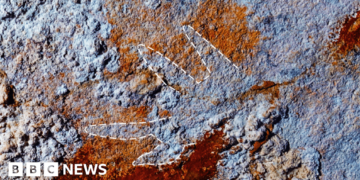
Researchers have unearthed what they believe to be the oldest known cave painting in the world on the Indonesian island of Sulawesi. This ancient artwork, a red outline of a hand dating back at least 67,800 years, marks an important milestone in understanding early human creativity and its geographical origins.
Why It Matters
This discovery challenges the long-held belief that artistic expression and abstract thinking among early humans emerged exclusively from Ice Age Europe. Instead, it suggests that such symbolic creativity was present much earlier and in broader regions than previously recognized, offering insights into the cognitive development of our species, Homo sapiens, and their migration patterns across the globe.
Key Developments
- The hand stencil painting in Sulawesi has been dated to at least 67,800 years ago, predating previous European records by approximately 1,100 years.
- This finding supports the notion that humans may have migrated to the Australia-New Guinea landmass, also known as Sahul, around 15,000 years earlier than some researchers previously argued.
- The research led by Griffiths University indicates that symbolic thought and creativity were not unique to Europe and may trace back to earlier human populations in Africa.
- New findings include evidence of continued artistic activity in a limestone cave called Liang Metanduno, revealing a long tradition of cave art across the region.
- Experts are beginning to recognize that complex representation in art emerged simultaneously across different continents rather than as a singular event in one location.
Full Report
Discovery Details
The painting was discovered in Liang Metanduno, a limestone cave on Muna, a satellite island off southeastern Sulawesi. This ancient artifact was created by an artist who pressed their hand against the cave wall and then expelled pigment around it, leaving a negative silhouette. The analysis of mineral crusts overlaying the stencil confirmed its minimum age. Unique features of the stencil, such as narrow and elongated fingers, suggest an innovative conceptual transformation by the artist, a trait not observed in Neanderthal artwork.
Implications for Human History
Professor Adam Brumm, a co-leader of the research project, has noted that this recent find significantly alters the narrative surrounding the origin of human artistic expression. Previously, many scholars believed that a ‘big bang’ of creativity occurred in Europe around 40,000 years ago. However, evidence of artistic endeavors in Sulawesi is pushing the time frame for complex symbolic behaviors much further back. Researchers now find that early humans were engaging in narrative art, a practice that underscores their ability to represent their world and share stories in ways that remain unmatched by other species.
Ongoing Research
The recent discoveries in Sulawesi are part of a broader trend that has seen researchers identify hundreds of rock art sites throughout the region. Fieldwork has shown that these caves were not merely local art showcases; they reflect a deeply embedded tradition that likely spread across populations. The team discovered younger paintings within the same cave, indicating that the site was a focal point for creative activity over tens of thousands of years.
Context & Previous Events
Prior to this discovery, the oldest cave art in Europe was believed to be a red hand stencil found in the Maltravieso cave in Western Spain, dated to around 66,700 years ago, albeit with some controversy surrounding its exact age. Other notable finds in Sulawesi include hand stencils and animal figures estimated to be at least 40,000 years old, as well as a hunting scene dated to approximately 44,000 years ago. With their cumulative findings, researchers indicate that artistic expression predates earlier estimates significantly, supporting theories of earlier human migration patterns into regions like Australia.