






















Trump’s Greenland Plan Raises Alarms Amid NATO Tensions
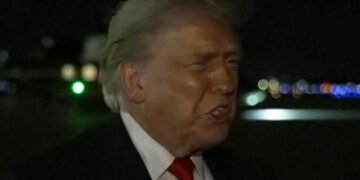
Former President Donald Trump has reignited controversy with his comments regarding Greenland, suggesting that the U.S. "needs" control over the territory. His remarks during a recent news conference signal escalating tensions with NATO allies, particularly Denmark, which currently governs the Arctic island.
Why It Matters
Trump’s persistent interest in Greenland highlights a shift in U.S. foreign policy, raising concerns about alliances and international stability. Greenland’s strategic location and resources have made it a point of contention, especially against a backdrop of rising geopolitical tensions. The potential for conflict over the territory could disrupt NATO’s unity and challenge long-standing diplomatic relations.
Key Developments
- Trump asserted during the press conference that the U.S. "will work something out" regarding Greenland, emphasizing national and world security needs.
- He threatened to impose tariffs on European nations that opposed U.S. efforts to acquire the territory, signaling discontent over NATO collaboration.
- British Defence Secretary John Healey is scheduled to discuss the situation with Danish officials in Copenhagen, indicating heightened diplomatic activity on the issue.
Full Report
Trump’s Comments on Greenland
At a news briefing marking one year since he assumed office, Trump made headlines with an ominous statement regarding Greenland. When questioned about his plans for the territory currently owned by Denmark, he cryptically replied, "You’ll find out," without specifying his intentions.
Emphasizing his belief in the necessity of acquiring Greenland, Trump stated, "We need it for security purposes, we need it for national security and even world security." He further indicated that discussions on the matter would take place at the upcoming World Economic Forum in Davos.
NATO Tensions
Trump’s territorial ambitions have not gone unnoticed by NATO allies. His harsh rhetoric came in response to European countries contributing troops to a reconnaissance mission in Greenland, which he deemed a provocation. In retaliation, Trump announced potential tariffs of 10% starting February 1, escalating to 25% by June 1, if the U.S. is not permitted to pursue its acquisition of the island.
Reactions from Allies
Trump’s remarks drew vocal criticism from his allies in Europe, demonstrating increasing friction within NATO. British Defence Secretary John Healey’s impending visit to Copenhagen underscores the delicate nature of international relations in the face of Trump’s controversial approach.
Diplomatic Relations with UK and France
While Trump expressed satisfaction with his relationships with British and French leaders, he noted that Sir Keir Starmer and Emmanuel Macron tend to adopt a harsher tone in his absence. He previously criticized Starmer’s decision regarding the Chagos Islands but claimed that both leaders treated him "very nicely" when he is present.
Venezuela and Other Issues
In addition to his comments on Greenland, Trump briefly addressed U.S. operations in Venezuela, stating that his administration has extracted 50 million barrels of oil from the country, which he claims will lead to lower prices domestically. He also voiced dissatisfaction over not receiving a Nobel Peace Prize, lamenting a decline in respect for Norway.
Context & Previous Events
This news conference comes at a time of unprecedented tension between the U.S. and Europe, largely fueled by Trump’s aspirations regarding Greenland. The island’s governance by Denmark serves as a reminder of the complexity of international relationships and the potential ramifications of Trump’s aggressive stance toward NATO allies.






