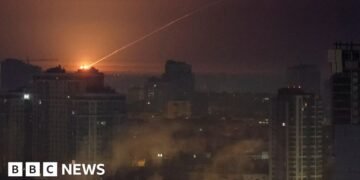























Kyiv is grappling with widespread power outages and bitter cold following a significant aerial assault from Russia that left much of the country without heat or electricity. Temperatures in Ukraine remain perilously low, hovering around -10C as the humanitarian crisis deepens.
As the impact of the strikes resonates across the nation, the urgent need for air defense systems and international support has escalated. The ongoing aggression highlights the challenges Ukraine faces, both militarily and in terms of civilian welfare, as winter conditions intensify.
Key Developments
- Ukraine reports a loss of approximately €80 million (£69 million) from air defense missile costs during the latest Russian attack.
- At least four fatalities and 33 injuries have occurred due to the strike.
- Over 5,600 residential buildings in Kyiv have lost heating and water, with significant portions still struggling to recover from previous outages.
- More than 10,000 people sought refuge in the city’s metro stations during the attack.
- President Zelensky postponed a trip to the World Economic Forum in Davos in light of the attacks, emphasizing the need for security guarantees from the U.S.
Full Report
Significant Infrastructure Damage
Russian aerial assaults involved the use of drones, ballistic, and cruise missiles aimed at various locations in Ukraine, particularly targeting Kyiv, Dnipro, and Odesa. The barrage resulted in multiple civilian casualties, with reports indicating that a total of four lives were lost and 33 individuals injured.
In the wake of the strikes, more than 5,600 residential buildings in Kyiv experienced outages of heat and water, complicating the situation for residents already facing harsh winter conditions. Mayor Vitalii Klitschko emphasized that nearly 80% of those buildings had recently restored heating after a previous large-scale attack on January 9, which had already left many residents in dire circumstances.
Humanitarian Crisis and Responses
With nighttime temperatures plummeting, many residents turned to makeshift solutions, including portable stoves and generators, to carry on their daily lives. Some families are resorting to purchasing lamps and thermal containers to cope with intermittent electricity in kindergartens, reflecting the pressing needs of vulnerable populations. “Less well-off individuals are struggling significantly,” noted a concerned parent, who highlighted the struggles of families in maintaining food supplies without reliable power.
Political Implications
The attacks prompted President Zelensky to remain in Kyiv rather than attend the World Economic Forum as initially planned. He expressed concerns over the continuing need for more air defense systems and missiles to counter Russian forces, pointing out that Moscow’s production capacities remained unabated.
During a discussion with reporters, Zelensky indicated that Ukraine’s security heavily depends on the unity of both European and American partners, particularly in addressing the increasing threats posed by ballistic missiles. “The key [to defense from] ballistic missiles is currently in the hands of the United States,” he stated, underscoring the urgency of timely deliveries and collaborative efforts to ensure Ukraine’s safety.
Context & Previous Events
This recent escalation follows a series of attacks that have strained Ukraine’s infrastructure throughout the winter months, as residents cope with intermittent power and water outages. Earlier attacks in January had already wreaked havoc on the capital’s utilities, revealing vulnerabilities in the face of ongoing conflict.