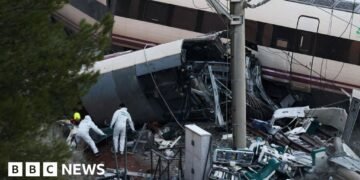























Tragedy Strikes in Southern Spain as Two Trains Collide, Leaving 41 Dead
In a devastating incident, a collision between two trains in southern Spain has resulted in at least 41 fatalities and over 120 injuries. The two-train crash marks the most catastrophic rail disaster in the country in more than a decade, prompting urgent rescue operations and an extensive investigation into the underlying causes.
Why It Matters
This tragic event highlights critical issues surrounding rail safety in Spain, particularly as investigations suggest possible flaws in infrastructure that may have contributed to the incident. The collision has reignited discussions about the safety standards and operational protocols within the nation’s rail system, raising concerns for passengers and their families.
Key Developments
- Rescue personnel have been working tirelessly as they search for additional victims feared trapped in the wreckage.
- The incident occurred on Sunday evening when a Madrid-bound train derailed and collided with an oncoming train near Adamuz.
- Transport Minister Óscar Puente stated that the investigation into the cause could take at least a month.
- A faulty or deteriorated rail weld is being examined as a possible contributing factor by investigators.
- Prime Minister Pedro Sanchez has postponed his visit to the World Economic Forum to oversee the situation.
- A national mourning period has been declared for three days.
Full Report
Rescue Operations Underway
As emergency services continue their search efforts, heavy machinery has been employed at the crash site to assist in uncovering additional bodies believed to be trapped. Over 400 individuals were on board the trains, with 41, including minors, currently hospitalized and 12 in intensive care.
Details of the Collision
The collision occurred around 19:45 local time when one train derailed on a straight stretch of track, impacting an oncoming service. Witness reports describe the moment of impact as feeling similar to an earthquake, with passengers screaming for help. Footage from the scene shows several train carriages tipped onto their sides, complicating rescue efforts further.
Investigation into Causes
Authorities are focusing on a reported gap of 30 centimeters in one of the rails that may have led to the tragic derailment. Experts from Spain’s Commission of Investigation of Rail Accidents are examining the interaction between the track and the trains, attempting to determine whether the rail issues contributed directly to the crash. Renfe President Álvaro Fernández Heredia dismissed human error as a factor since the systems in place are designed to correct such mistakes.
Warnings Ignored
Concerns regarding the safety of the Madrid-Andalusia line had already been raised in August by train operators, who requested a speed limit reduction due to the increasing number and weight of high-speed trains, citing a surge in operational failures.
Context & Previous Events
This incident represents Spain’s most severe rail disaster in over ten years, underscoring longstanding concerns regarding railway safety and infrastructure. The national rail operator, Adif, is under scrutiny as the investigation unfolds, particularly in light of previous warnings from train drivers regarding the state of the rail system.