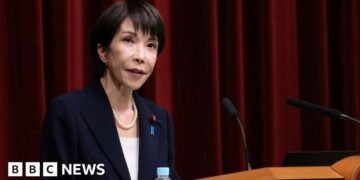























Japan’s Prime Minister Takaichi Dissolves Parliament in Preparation for Early Election
Japan’s Prime Minister Sanae Takaichi announced she will dissolve parliament on Friday, initiating a path toward an early election scheduled for February 8. This decisive move aims to leverage her robust public support, following her rise to leadership last October, amidst growing economic challenges facing the nation.
Why It Matters
The upcoming election represents a critical juncture for Takaichi and her Liberal Democratic Party (LDP), as they attempt to secure a stronger mandate amid public discontent with rising costs of living. This election marks Japan’s second general vote in just two years, testing citizens’ appetite for Takaichi’s proposed economic policies while addressing key national concerns.
Key Developments
- Takaichi emphasized the weight of her decision, stating it could shape Japan’s future alongside its citizens.
- Despite initial high approval ratings, the LDP’s standing in polls remains tenuous, leading to risks associated with the snap election.
- Campaigning for the 465 lower house seats will begin on January 27.
- The LDP currently holds 199 seats and governs in a coalition with the Japan Innovation Party, maintaining a fragile majority.
- Takaichi’s cabinet approved a record defense budget amid heightened regional tensions, particularly regarding China’s military actions.
- The prime minister aims to solidify her party’s power to implement her ambitious economic agenda.
Full Report
Takaichi’s Leadership and Public Support
Taking office on October 21, Takaichi is Japan’s first female prime minister and has garnered significant public support, with approval ratings ranging from 60% to 80%. Her campaign for a solid majority in parliament comes at a time when the nation is grappling with economic difficulties, making voters’ needs paramount. "Is Sanae Takaichi fit to be prime minister? I wanted to ask the sovereign people to decide," she stated in a news conference.
Economic Policy and Security Concerns
Takaichi has pledged to enhance public spending as part of her economic strategy, harking back to similar stimulus measures seen during former Prime Minister Shinzo Abe’s tenure. Recent decisions, such as approving a historic defense budget of nine trillion yen ($57 billion), reflect her commitment to addressing security concerns, particularly with regards to China. Her comments in November regarding Japan’s self-defense capabilities in the event of a Chinese attack on Taiwan have strained diplomatic relations significantly.
Risks of a Snap Election
Takaichi’s decision to call for an early election is fraught with risks. Japan’s political landscape has seen instability, with Takaichi being the fourth prime minister in five years. The previous incumbent, Shigeru Ishiba, saw a snap election result in one of the LDP’s poorest performances. The emergence of a new opposition coalition, the Centrist Reform Alliance, adds further uncertainty to the electoral landscape.
Takaichi remains hopeful that her approach—focused on continuity in economic policy—will build public trust and stabilize her administration’s trajectory. Still, experts suggest that her approval ratings, however favorable now, are unlikely to remain static in the lead-up to the election.
Context & Previous Events
The LDP, which has predominantly governed Japan since 1955, currently holds a slim majority in the House of Representatives, relying on an alliance with Japan Innovation Party. While Takaichi aims to enhance her party’s standing, the landscape remains volatile with public sentiment frequently shifting due to economic pressures and political scandals.