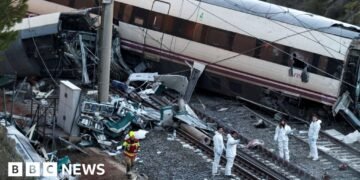























Tragic Train Collision in Southern Spain Claims 39 Lives
At least 39 individuals have died and several others are injured following a catastrophic collision between two high-speed trains in southern Spain. The incident, which has been identified as the worst rail disaster in the country in over a decade, occurred near Córdoba, raising alarm over railway safety protocols.
Why It Matters
This tragedy underscores significant concerns regarding rail safety in Spain and the effectiveness of existing regulations. With the country operating one of the most advanced rail systems in Europe, such a devastating accident prompts urgent calls for a thorough investigation and reassessment of safety measures to prevent future tragedies.
Key Developments
- The collision took place around 19:45 local time on Sunday, shortly after one train departed from Málaga heading to Madrid.
- The train derailed and crossed to an opposing track, where it collided with another train en route from Madrid to Huelva.
- The majority of fatalities and injuries occurred in the front carriages of the train bound for Huelva, according to Transport Minister Óscar Puente.
- An investigation into the cause of the derailment has been initiated, but conclusions are not expected for at least a month.
- Rescue operations continue amidst difficult conditions, with reports of some passengers potentially trapped in twisted carriages.
- As of Monday morning, medical assistance has been provided to 112 individuals, with 48 currently hospitalized; five of these victims are minors.
Full Report
Details of the Collision
The accident occurred near Córdoba, where one train, operated by Adif, reportedly derailed after losing control approximately an hour after leaving Málaga. Following the derailment, it collided with an oncoming train, resulting in severe damage and casualties, particularly among those in the front carriages of the Huelva-bound train. Minister Puente indicated that initial assessments depict the crash scene as notably tragic.
Investigation Underway
While the exact cause of the derailment is still unknown, authorities are treating the incident as urgent and atypical. Minister Puente noted that railway experts consulted by the government are confused by the sequence of events related to the accident. Officials are hopeful that the investigation will yield answers that could avert future incidents.
Rescue Efforts and Casualty Reports
The rescue efforts have faced significant challenges due to the mangled state of the carriages. Francisco Carmona, head of firefighters in Córdoba, described the rescue process as intricate, revealing that at least one deceased individual had to be removed to reach a living survivor. As the search continues, the identities of the deceased have yet to be confirmed.
Medical Responses
Emergency services report that as of Monday, 112 people have received treatment for their injuries. Among those hospitalized are 11 adults in intensive care and five minors, including one facing critical conditions. There is concern that the death toll may continue to rise as officials work to account for all passengers and assess their conditions.
Context & Previous Events
This incident marks Spain’s most severe rail disaster in more than ten years, raising pressing questions about rail safety and emergency response in one of Europe’s most technologically advanced transportation networks. As the investigation unfolds, both local and national leaders will likely face increasing scrutiny over their handling of the situation and measures to improve railway safety moving forward.