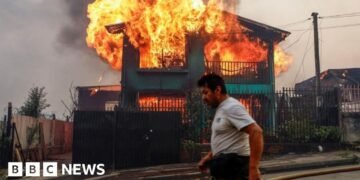























Chile Declares State of Catastrophe Amid Deadly Wildfires
Chilean President Gabriel Boric has announced a state of catastrophe in the Ñuble and Biobío regions, where rampant wildfires have claimed at least 18 lives and prompted the evacuation of over 50,000 residents. With fire activity intensifying, Boric indicated that the death toll could rise as authorities grapple with the devastating impact of the blazes.
Why It Matters
This declaration reflects the urgent need for resources and emergency response in the face of significant loss of life and property. As high temperatures and strong winds exacerbate the situation, the state response could mobilize military assets to assist firefighting efforts and support affected communities. With wildfires becoming increasingly common due to long-term drought conditions, this crisis underscores the growing environmental challenges facing Chile.
Key Developments
- President Boric declared a state of catastrophe in response to ongoing wildfires.
- The fires have led to the evacuation of more than 50,000 people in the affected areas.
- Approximately 250 homes have been destroyed in the Ñuble and Biobío regions.
- Emergency responders are currently facing 24 active fires nationwide, with the most severe located near Concepción.
- The fires have consumed 8,500 hectares (21,000 acres) thus far.
Full Report
In a post on social media platform X, Boric stated, “In light of the serious ongoing wildfires, I have decided to declare a state of catastrophe.” He assured that all necessary resources would be mobilized to combat the fires.
The bulk of the evacuations took place in the cities of Penco and Lirquen, located north of Concepción, which together house around 60,000 residents. Local media have reported distressing images of charred vehicles and devastated landscapes.
The National Forestry Corporation (Conaf) reported that firefighters are actively combating 24 wildfires across the country as of Sunday. The agency identified the blazes in Ñuble and Biobío as particularly dangerous, exacerbated by exceptionally dry conditions, steep summer temperatures, and fierce winds that hinder firefighting efforts.
Weather forecasts predict temperatures could approach 38°C (100°F) in the areas stretching from Santiago to Biobío in the following days, intensifying the challenges facing both residents and emergency responders.
Context & Previous Events
Chile has grappled with devastating wildfires in recent years, significantly worsened by persistent drought. In a tragic incident two years ago, forest fires in the Valparaíso region, close to Santiago, resulted in the loss of at least 120 lives.