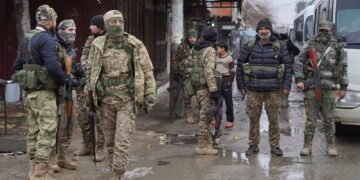























Ceasefire Declared Between Syrian Government and Kurdish Forces
A ceasefire has been announced between Syrian government troops and U.S.-backed Kurdish-led forces, marking a significant shift in the ongoing conflict in northeastern Syria. This development comes amidst heightened tensions and recent territorial gains by the Syrian military, including the capture of key oil and gas fields.
Why It Matters
The ceasefire is crucial as it seeks to stabilize a region that has been a battleground for various factions post-civil war. It also reflects the complex dynamics of U.S. involvement and support for Kurdish forces, historically instrumental in combating the Islamic State. The future of resources in this strategically important area could redefine the balance of power between the Syrian government and Kurdish authorities.
Key Developments
- A ceasefire has been declared, according to Syrian state media.
- Syrian troops have captured the Omar oil field and the Conoco gas field, key resources previously held by the Kurdish-led Syrian Democratic Forces (SDF).
- The Syrian government plans to secure all oil and gas fields in Deir Ezzor and Raqqa.
- U.S.-backed troops are to withdraw, though some personnel may integrate into Syrian government ministries.
- President Ahmed al Sharaa has condemned militia control over significant national resources.
Full Report
Ceasefire Announcement
The ceasefire agreement follows intense fighting in northeastern Syria, particularly around Deir Ezzor and Raqqa. Syrian state media reported that the government forces aim to reclaim control of oil and gas resources for the state’s benefit.
Military Moves and Territorial Gains
The Syrian military has made substantial advancements, recently taking control of the Omar oil field, a significant source of revenue for the Kurdish-led SDF. The loss of this strategic resource, alongside other fields, has imposed financial strain on the Kurdish forces. The Conoco gas field was also seized as part of ongoing military operations.
In response, Kurdish officials had initially not acknowledged their territorial losses but alleged violations of the ceasefire by Syrian forces, who reportedly advanced into areas outside the agreed terms after the SDF withdrawal.
International Reactions
U.S. military officials have urged the Syrian government to halt its offensive actions, emphasizing the need for de-escalation. The situation has prompted diplomatic outreach, with French President Emmanuel Macron expressing his concern to President Sharaa over the offensive against Kurdish forces and advocating for a permanent ceasefire.
Future Integration Plans
Amid the chaos, there have been stalled discussions regarding the integration of Kurdish military and civilian bodies into the Syrian government. This effort, aiming for completion by the end of 2025, has faced hurdles, further complicating the already fraught relations between the Syrian regime and Kurdish authorities.
Context & Previous Events
Tensions escalated following a series of offensives by government forces against Kurdish positions, culminating in the significant territorial gains noted above. President Ahmed al Sharaa’s remarks reflect the government’s stance that militia control over critical national resources is unacceptable, particularly as it seeks to unify the country after years of civil strife.
Overall, the recent developments can be viewed as a fork in the road for U.S. involvement in the region, where balancing support for Kurdish forces and acknowledging the legitimate government of Syria poses substantial diplomatic challenges.