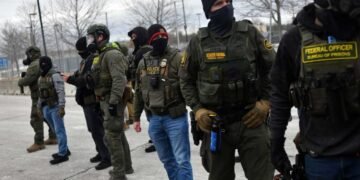























Federal Troops on Standby Amid Minnesota Protests
Up to 1,500 U.S. active-duty troops stationed in Alaska are prepared for potential deployment to Minnesota as tensions escalate over ongoing protests regarding immigration enforcement in Minneapolis. This readiness comes shortly after President Trump hinted at invoking the Insurrection Act, a move he later retracted, highlighting the volatile situation on the ground.
The involvement of federal troops raises significant questions about the balance between civil authority and military intervention, especially in a context where local officials believe the situation is manageable without additional federal enforcement.
Key Developments
- 1,500 troops from the Army’s 11th Airborne Division in Alaska are on standby.
- Governor Tim Walz has prepared the Minnesota National Guard for potential deployment.
- Minneapolis Mayor Jacob Frey criticized the federal response, stating crime rates have decreased.
- Legal experts warn that invoking the Insurrection Act would be an exceptional measure.
Full Report
Military Readiness
A U.S. official confirmed that up to 1,500 active-duty troops located in Alaska are on standby for deployment to Minnesota amid significant protests. The troops belong to the Army’s 11th Airborne Division, specializing in operations under cold weather conditions. Chief Pentagon spokesperson Sean Parnell indicated that the Department of War stands ready to follow orders from the Commander-in-Chief if necessary.
Local Law Enforcement Support
In response to the ongoing situation, Minnesota Governor Tim Walz instructed the Minnesota National Guard to prepare for possible deployment. Although members have not been activated yet, the Guard emphasized their role in protecting the local community and preserving First Amendment rights. If deployed, they would wear distinct yellow reflective vests to differentiate themselves from other law enforcement agencies.
Escalating Tensions
The surge in federal agents in Minneapolis is part of the Department of Homeland Security’s largest operation to date, involving thousands of personnel. This has led to rising confrontations between federal officers and local residents. Mayor Jacob Frey expressed alarm at the potential use of military forces, indicating that the city’s crime rates are lower than ever and suggesting that additional federal agents are unnecessary.
Legal Perspectives
Legal scholars have weighed in on the implications of the Insurrection Act. Joseph Nunn, an attorney at the Brennan Center’s Liberty and National Security Program, pointed out that the act is reserved for extreme circumstances when civilian authorities cannot manage a crisis. Using it simply to suppress protests would represent a significant and troubling expansion of executive power, he noted.
Context & Previous Events
These developments unfold against the backdrop of heightened tensions surrounding immigration enforcement in the U.S. The protests have been fueled by increasing federal operations, which the Department of Homeland Security has characterized as unprecedented in their scale. President Trump’s earlier threats to utilize military intervention have drawn criticism and concern, particularly from local officials who argue for maintaining civil order without federal escalation.






