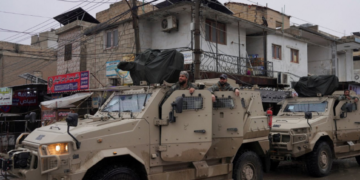























Syrian Forces Capture Largest Oilfield Amid Kurdish Withdrawal
In a significant escalation in northeastern Syria, government forces have seized control of the Omar oilfield, the nation’s largest, following the withdrawal of the Kurdish-led Syrian Democratic Forces (SDF). This development marks a pivotal moment in the ongoing conflict as the SDF retreats to areas east of the Euphrates River.
This development underscores the shifting power dynamics in Syria, highlighting the vulnerability of Kurdish forces that have controlled substantial territory, including rich oil reserves, for years. The SDF’s decision to withdraw, reportedly following talks with U.S. officials, points to the complexities of alliances in the region as both sides navigate ongoing tensions and the potential for broader implications in the fight against Islamic State remnants.
Key Developments
- Syrian troops have captured the Omar oilfield and nearby gas fields after SDF’s strategic withdrawal.
- The Syrian army also gained control of the Tabqa dam, a significant asset on the Euphrates River.
- President Ahmed al-Sharaa indicated a goodwill gesture by recognizing Kurdish as a national language and designating the Kurdish new year as an official holiday.
- Clashes last week resulted in at least 12 fatalities in Aleppo, illustrating the ongoing violence despite U.S. attempts to mediate a ceasefire.
Full Report
Ongoing Military Actions
On Sunday, Syrian officials announced the successful capture of the Omar oilfield, marking a pivotal shift in control within the conflict-ridden region. The SDF, which has been instrumental in fighting against the Islamic State for the past decade, has significantly relied on these oil resources for funding its operations.
In addition to the Omar facility, government troops advanced into the town of Tabqa and took control of the strategically important dam located there. Reports from the Syrian Observatory for Human Rights confirmed the SDF’s withdrawal from various villages and towns in the eastern countryside of Deir Ezzor province, further solidifying the extent of Syrian control.
Kurdish Withdrawal and Responses
The SDF’s recent decision to pull back is believed to have followed discussions with U.S. officials and was accelerated by a series of violent clashes with Syrian forces. In a statement reflecting a shift in approach, President al-Sharaa has formally recognized Kurdish national rights for the first time since Syria’s independence in 1946. This includes making Kurdish a national language and establishing the Kurdish new year as an official holiday.
However, tensions remain high, with Syrian authorities accusing the SDF of destroying two crucial bridges on the Euphrates. The situation is compounded by recent violence, with casualties reported amid clashes in areas like Aleppo.
Context & Previous Events
This latest military maneuvering occurs in the context of ongoing negotiations and a long-standing conflict characterized by shifting alliances. Following the ousting of Bashar al-Assad in late 2024, President al-Sharaa has emphasized the need to integrate Kurdish military and civilian entities into the national framework. A formal agreement between the SDF and the government was signed in March 2025; nearly a year later, implementation remains stalled as each side blames the other for the lack of progress.