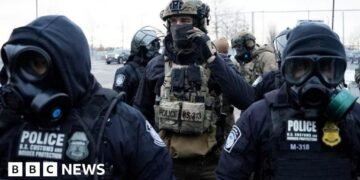























Soldiers on Standby Amid Ongoing Anti-ICE Protests in Minneapolis
In response to escalating anti-Immigration and Customs Enforcement (ICE) protests in Minneapolis, the U.S. military has placed 1,500 soldiers on standby for potential deployment. The soldiers, currently stationed in Alaska, may be called upon should the situation demand federal intervention, as unrest continues following the controversial shooting of a U.S. citizen by an ICE agent.
Why It Matters
The deployment of military personnel represents a significant escalation in governmental response to civil unrest. Tensions have heightened in Minneapolis after the death of legal observer Renee Good, which has ignited protests nationwide and raised serious questions about law enforcement practices and civil liberties. The situation poses a complex challenge for both local authorities and the federal government in balancing public safety with the right to peaceful protest.
Key Developments
- 1,500 soldiers from the 11th Airborne Division are on alert but no deployment decision has been made.
- Protests were sparked by the fatal shooting of Renee Good by an ICE agent earlier this month.
- U.S. District Judge Katherine Menendez has imposed restrictions on the crowd control tactics available to federal agents.
- Governor Tim Walz has mobilized the Minnesota National Guard in advance of upcoming protests.
- Local city leaders and activists are demanding justice for Good, who was attending the protests as a legal observer.
Full Report
As protests against ICE continue in Minneapolis, a U.S. defense official confirmed to CBS News that 1,500 soldiers are ready for deployment if needed. These active-duty personnel are currently stationed in Alaska, awaiting further instructions from the U.S. President. The protests stem from the recent death of Renee Good, who was shot by an ICE agent while acting as a legal observer during an enforcement action.
In an effort to mitigate potential violence, Minnesota officials have urged protesters to remain peaceful. Governor Tim Walz has mobilized the National Guard and called for heightened state law enforcement presence to ensure order. This comes as federal law enforcement has faced scrutiny regarding their treatment of demonstrators, particularly after Judge Katherine Menendez issued an order limiting the use of aggressive crowd control measures against peaceful protesters.
Good’s death has resonated deeply within the community, igniting protests not only in Minneapolis but across the country. Many demonstrators are advocating for justice, holding signs that say “Justice for Renee.” The situation has further intensified as the Trump administration controversially labeled Good a “domestic terrorist,” provoking outrage among her supporters.
Context & Previous Events
The protests in Minneapolis are part of a broader backlash against ICE’s enforcement tactics, especially following incidents perceived as unjust, such as the shooting of Good on January 7. Historical tensions between federal law enforcement and immigrant advocacy groups have played a critical role in shaping public opinion and response, underscoring the polarizing nature of immigration policy in the United States.