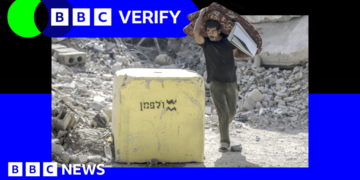























Israel Alters Gaza Control Markers, Sparking Confusion and Tension
Israel has repositioned marking blocks along its post-ceasefire line of control deeper into Gaza, leading to heightened confusion among Palestinians. Satellite imagery shows this alteration in at least three locations, causing significant safety concerns in the affected areas.
Why It Matters
This development complicates the already fraught situation in Gaza, where residents find themselves in precarious positions amid ongoing conflict. By moving these markers, Israel not only challenges the clarity of territorial boundaries established under a U.S.-brokered ceasefire agreement with Hamas but also raises fears of further encroachments and military incidents that could result in civilian casualties.
Key Developments
- Marker Relocation: Israel Defense Forces (IDF) moved designated blocks deeper into Gaza, surpassing previously set boundaries as defined in military maps.
- Warning Issued: Israeli Defense Minister Israel Katz had cautioned in October that violations of the designated "Yellow Line" would be met with force.
- Fatal Incidents: Since the warning, the IDF has reportedly engaged in numerous deadly encounters along the line, including strikes that have resulted in civilian deaths.
- Ongoing Operations: Despite a ceasefire agreement mandating troop withdrawals, IDF vehicles have been observed operating beyond the markers, accompanied by demolitions in the vicinity.
- Civilian Impact: Many Palestinians express uncertainty and fear regarding their safety, compounded by the IDF’s actions and military operations.
Full Report
Confusion Over New Boundaries
Israel has shifted concrete blocks meant to signify its control line, moving them deeper into Gaza in multiple instances. Reports indicate that at least 16 markers have been repositioned. In particular, the al-Tuffah neighborhood of Gaza City saw the movement of blocks averaging around 295 meters further into the Strip. While Israeli authorities maintain these changes align with operational evaluations, the lack of clarity leaves locals uncertain about where they may safely reside or travel.
Incidents of Violence
Since the October warning from Israel’s Defense Minister, the IDF has engaged in over 69 incidents of gunfire aimed at individuals crossing the Yellow Line. Notable occurrences include an airstrike on a school sheltering displaced persons in the al-Tuffah region and the deaths of civilians, including children, near recently shifted markers. Eyewitness accounts describe the chaos and terror experienced by residents due to military activities.
Demolitions and Military Activity
While Israel agreed to halt troop advancements past the Yellow Line under the ceasefire agreement, recent satellite imagery and videos reveal IDF personnel operating beyond this boundary. Not only have military vehicles been spotted over 400 meters past the line, but demolitions of buildings have also taken place in proximity to relocated markers. Residents are left navigating a landscape marked by destruction and the uncertainties of military operations.
Context & Previous Events
The IDF has been accused of using the relocation of these markers as a strategic method for territorial control, allowing for adjustments to local land use without a formal alteration of the official border. While the ceasefire established a framework for troop withdrawal, it has not halted operations that may infringe upon civilian landscapes. Analysis of previous incidents reveals a pattern of violence in areas adjacent to the markers, highlighting the precarious nature of the current ceasefire arrangement.