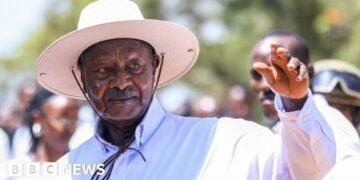























Uganda’s Museveni Secures Another Term Amid Controversy
President Yoweri Museveni has been announced as the victor of Uganda’s recent elections, further extending his presidency to over 40 years. The electoral commission reported that Museveni garnered 72% of the vote, while his closest rival, Bobi Wine, received 25%. Wine has challenged the legitimacy of the results, alleging electoral misconduct.
Why It Matters
This election underscores the ongoing tensions in Uganda’s political landscape, where Museveni’s long-standing rule is met with increasing opposition and allegations of systemic violence. As dissent grows, the future of democratic processes and human rights in the country hangs in the balance.
Key Developments
- Museveni secured 72% of the votes while Bobi Wine received 25%, according to the electoral commission.
- Bobi Wine has labeled the results as “fake” and accused the government of ballot stuffing.
- At least 21 people have reportedly died amid election-related violence, although authorities have confirmed only seven fatalities.
- Access to the internet has been suspended nationwide, complicating information verification and raising concerns over censorship.
- Wine’s party alleged that he was abducted from his home, a claim police have denied.
- Wine has called for peaceful protests and demanded the restoration of internet services.
Full Report
Election Results and Allegations
Yoweri Museveni’s election victory marks an extension of his tenure as president, which began in 1986 when he assumed power as a rebel leader. This win continues his streak of seven consecutive elections. In contrast, Bobi Wine, a 43-year-old former pop star and Museveni’s primary challenger, has publicly condemned the election results. He characterized the outcome as fraudulent and highlighted concerns over alleged ballot manipulation, although he has not submitted any evidence to support these claims. Uganda’s election authorities have not addressed these accusations directly.
Violence and Restrictions
The elections have been marred by violence, with reports indicating that a minimum of 21 individuals have lost their lives during the turmoil surrounding the voting process. Official figures from authorities confirm seven deaths associated with the unrest. The National Unity Platform, Wine’s political party, has called for non-violent protests in response to the perceived electoral injustices.
Internet Blackout and Security Measures
Compounding the situation, Ugandan authorities imposed an internet blackout on Tuesday, citing the need to prevent misinformation and potential incitements to violence. This decision has drawn criticism from the UN human rights office, which described the move as “deeply worrying.” Uganda’s authorities have maintained that the blackout is necessary to preserve public order. In light of this, Bobi Wine has called for the restoration of internet access to ensure transparency amidst ongoing electoral disputes.
Concerns Over Personal Safety
In the wake of the election, there are serious concerns regarding Bobi Wine’s safety. His political party reported that he had been taken from his home in Kampala, a claim that police have refuted. Wine later posted on social media, indicating that he had managed to evade capture during a raid by armed security forces and is currently in hiding. He previously suggested that he was under house arrest, a claim that the police have not confirmed. In statements to the media, a police spokesman noted that Wine’s movements are restricted due to security precautions in his neighborhood.
Context & Previous Events
Yoweri Museveni first came to power in 1986, and his leadership has been characterized by both significant infrastructural development and persistent allegations of authoritarianism. While he has won multiple elections since then, each election has been marked by accusations of irregularities and suppression of opposition. Bobi Wine, who has emerged as a prominent voice against Museveni’s rule, has increasingly rallied support among younger voters dissatisfied with the status quo.