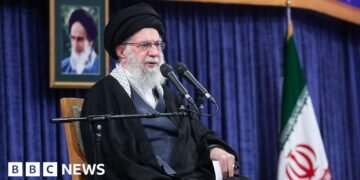























Iran’s Supreme Leader Blames U.S. for Unrest Amid Ongoing Protests
In a recent address, Iran’s Supreme Leader, Ayatollah Ali Khamenei, accused the United States and former President Donald Trump of inciting casualties and unrest within Iran during ongoing anti-government protests. The remarks come amid a volatile period in Iran, where thousands have reportedly lost their lives as demonstrations against the government escalate.
Why It Matters
The protests, triggered by economic challenges, have evolved into widespread calls for change within the Iranian political landscape. Khamenei’s statements not only highlight the regime’s efforts to deflect blame but also signal heightened tensions between Iran and the U.S., particularly in light of potential military threats aimed at safeguarding protestors.
Key Developments
- Khamenei acknowledged significant violence during protests and blamed deaths on “seditionists.”
- Iranian Human Rights Activists News Agency (HRANA) reports 3,090 fatalities linked to ongoing unrest since December 28.
- Internet services remain severely restricted, complicating accurate assessments of the current situation.
- Trump has not ruled out military intervention to protect Iranian protesters, stating he was informed that violence may have diminished.
- No official response has emerged from Trump’s camp regarding Khamenei’s accusations, as the U.S. has adjusted its military presence in the region.
Full Report
Khamenei’s Accusations
In his Saturday speech, Khamenei laid the blame for the current unrest squarely on the U.S., specifically targeting Trump as a “criminal” who should be “held accountable” for the turmoil. He described the recent protests as “riots” fueled by Iran’s adversaries and dismissed the demonstrators as provocateurs.
Scope of the Protests
Initial unrest began in late December, primarily focused on economic dissatisfaction. However, the movement has since shifted toward demands for the end of Khamenei’s rule. HRANA’s reports indicate that the protests have left thousands dead in violent confrontations with security forces.
International Response
Trump has encouraged Iranian demonstrators to persist in their protests and has warned of military action should the Iranian government resort to lethal force against them. The U.S. has reduced personnel at the Al-Udeid air base in Qatar, a move characterized as precautionary amidst the rising tensions.
Current Climate
Although reports of unrest have quieted recently, ongoing constraints on internet access have hampered the gathering of current information, leaving the full dynamics of the situation somewhat obscured. The government’s harsh response has prompted international condemnation and continues to strain Iran’s relations with the West.
Context & Previous Events
Protests began in Iran on December 28, primarily sparked by economic grievances. The Iranian government has consistently branded the demonstrations as foreign-sponsored riots, escalating the narrative of external interference as a means of consolidating its stance against both protesters and Western nations.