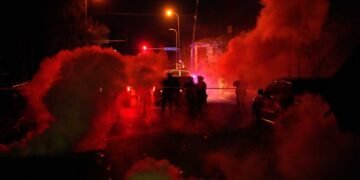























Federal Ruling Protects Rights of Peaceful Protesters Amid Immigration Operations
Minneapolis federal officers must refrain from using force against peaceful protesters observing immigration enforcement actions, a recent ruling by U.S. District Judge Kate Menendez determined. This decision underscores the ongoing tensions between law enforcement and activists following a series of controversial ICE operations in the Twin Cities area.
Why It Matters
The ruling is significant as it highlights the legal boundaries set for federal agents amid heightened immigration enforcement, particularly under the Trump administration. The court’s decision not only safeguards the rights of demonstrators but also raises questions about the conduct of law enforcement in sensitive community interactions, especially in light of recent violent incidents.
Key Developments
- Federal officers cannot detain peaceful observers unless there is reasonable suspicion of their interference.
- Ruling follows an incident where an immigration agent fatally shot a woman during enforcement activities.
- The American Civil Liberties Union of Minnesota represents the activists in the case.
- Department of Homeland Security officials assert that law enforcement agencies must operate under constitutional guidelines while ensuring the safety of their officers.
Full Report
Judge Kate Menendez’s recent ruling restricts federal agents from detaining individuals who are not actively obstructing their operations. The case was brought forward by six activists who have consistently monitored the actions of Immigration and Customs Enforcement (ICE) and Border Patrol since a crackdown commenced in December.
Tensions have escalated in the Minneapolis-St. Paul area following a tragic event on January 7, where an immigration officer fatally shot Renee Good as she drove away. The incident, captured on numerous videos, has intensified public scrutiny of immigration enforcement tactics.
The ACLU of Minnesota argues that the government is infringing upon the constitutional rights of residents. Following the ruling, DHS Assistant Secretary Tricia McLaughlin responded, stating that federal officers would continue to act within constitutional limits while performing their duties. She emphasized that any acts of violence against officers would be treated seriously, reaffirming that obstructing law enforcement is a punishable offense.
The ruling specifically prohibits agents from stopping vehicles or individuals without credible evidence of obstructive behavior. Judge Menendez emphasized that merely following the agents does not constitute reasonable suspicion for a stop, aiming to delineate the rights of both protesters and law enforcement.
Judge Menendez is also supervising a related lawsuit initiated by Minnesota state officials, which challenges the broader enforcement tactics in question. During recent hearings, she acknowledged the critical nature of both cases but highlighted the complexity of legal precedents surrounding these issues.
Context & Previous Events
The activists involved in this case have been vigilant in observing federal enforcement actions amidst a broader immigration crackdown initiated in December under the Trump administration. The legal confrontation gained momentum following the fatal shooting of Renee Good by an immigration officer, creating significant unrest in the community and triggering demands for legal accountability and reform.
This ruling serves as a pivotal moment, reinforcing the essential balance of rights in politically charged environments and addressing the urgent need for dialogue between law enforcement and community advocates.






