






















Venezuelan Opposition Leader Confident in Transition to Free Elections
Venezuela’s opposition leader Maria Corina Machado expressed strong confidence in the imminent dismantling of Nicolás Maduro’s regime during a press conference in the U.S. on Friday. Her remarks came one day after she presented her Nobel Peace Prize to former President Donald Trump, signaling a potential shift in the political landscape of Venezuela.
Why It Matters
The dynamics of Venezuelan politics are at a critical juncture, especially following the U.S. military’s high-profile actions against Maduro and his administration. Machado’s statements might galvanize both domestic and international support for democratic reforms, as the country grapples with years of political and economic turmoil under a regime she describes as "criminal."
Key Developments
- Maria Corina Machado reiterated her belief that Venezuela would soon return to democratic governance.
- She criticized the current vice president, Delcy Rodriguez, labeling her a "communist" and describing her control over a "repressive system."
- Trump praised Machado as a "wonderful woman" and remarked on the significance of her gesture in giving him her Nobel medal.
- The White House maintained that Machado lacks the necessary support to lead Venezuela in the near future.
- CIA director John Ratcliffe recently visited Caracas to meet Rodriguez, marking a notable diplomatic engagement.
Full Report
Machado’s Confidence
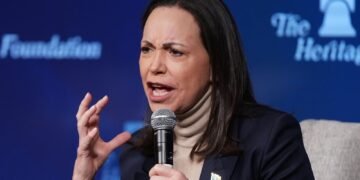
At the Heritage Foundation, Machado told reporters, “I am profoundly, profoundly confident that we will have an orderly transition” towards elections in Venezuela. She asserted that the "criminal structure" that has dominated the nation will eventually dismantle. "Venezuela is going to be free," she added, while acknowledging that this process would take time.
Political Tensions
Despite her optimistic outlook, Machado’s comments hint at the underlying tensions within Venezuelan politics. She directly referred to Delcy Rodriguez, Maduro’s vice president, as not only a "communist" but also as someone who lacks control over the military, labeling her system as "unsustainable." These remarks underline the fragile balance of power in Venezuela’s opposition.
U.S. Support
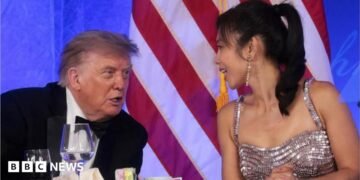
During a meeting with Trump, Machado presented him with her Nobel Peace Prize, a gesture he described as "a wonderful gesture of mutual respect." Following this interaction, White House press secretary Karoline Leavitt reiterated that Trump believes Machado does not currently possess the necessary backing to lead Venezuela effectively.
CIA Engagement
In a significant move, John Ratcliffe’s trip to Caracas represents the highest-level U.S. engagement with Venezuelan officials since the recent upheaval against Maduro. Observers are noting the implications of this visit for future U.S. foreign policy regarding Venezuela.
Nobel Committee Statement
In a statement addressing Machado’s decision to gift her Nobel medal, the Norwegian Nobel Committee clarified that the award remains hers despite the transfer of the medal. They emphasized that laureates have the discretion on how to manage their prizes without restrictions.
Impact of Military Action
The backdrop of these developments is marked by U.S. military actions, including the reported deaths of 47 Venezuelan soldiers during a strike in Caracas, which occurred on January 3. The ramifications of this military engagement may play a pivotal role in shaping the ongoing conflict within the country.
Context & Previous Events
- Machado is seen as a strong contender in upcoming elections, which have been clouded by allegations of corruption favoring Maduro’s regime.
- The U.S. military’s capture of Maduro and his wife earlier this year marked a significant escalation in U.S. involvement in Venezuelan affairs.
- The Nobel Committee confirmed that Machado remains the historical recipient of the Peace Prize despite the ceremonial gift of the medal to Trump.