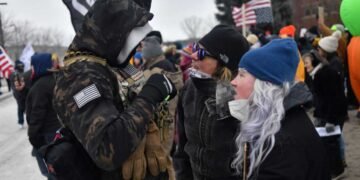























Tensions High in Minneapolis as Federal Forces Mobilize Amid Protests
Residents of Minneapolis are facing increased unrest as the federal response to protests sparked by a shooting incident intensifies. President Trump has threatened to invoke the Insurrection Act to curtail demonstrations in the wake of immigration officers shooting an immigrant man, raising fears and concerns in the community.
Why It Matters
The situation underscores the growing divisions over immigration policies, particularly in urban areas, where the presence of federal officers can exacerbate local tensions. This is further complicated by recent violence linked to protests, igniting debates on law enforcement practices and community safety. The actions taken in Minneapolis may also have broader implications for national immigration policy and civil rights movements.
Key Developments
-
President Trump is contemplating the invocation of the Insurrection Act in response to escalating protests.
-
Approximately 3,000 federal immigration officers are either deployed or expected to arrive in the Twin Cities.
-
Last week, an immigration officer shot a man in the leg, igniting unrest on the city’s north side.
-
Tear gas, flash bangs, and pepper balls have been used by immigration officers to disperse crowds during ongoing protests.
- Asylum seekers and community members express fears for their safety amid heightened federal presence.
Full Report
Clashes Erupt Following Shooting
Protests in Minneapolis escalated when an immigration officer shot an immigrant man, leading to significant unrest in the area. Community members have rallied against the actions of federal agents, prompting the administration’s significant federal deployment. The situation remains volatile, with many in the community feeling anxious and unsafe.
Federal Response and Community Activism
In the last five days, immigration officers have utilized crowd control measures that include tear gas and flash bangs to manage protests. Students and local activists have engaged in peaceful forms of resistance, such as following immigration agents in their vehicles while documenting the cuts. Many residents, including asylum seekers, articulate their fears of leaving their homes in response to the heavy law enforcement presence, as illustrated by statements from individuals who wish to remain anonymous for safety reasons.
Political Maneuvering on Immigration
In a separate development, Venezuelan opposition leader María Corina Machado visited Trump to discuss her political future in light of U.S. military actions in her home country. Notably, Trump has chosen to endorse Venezuela’s acting president instead of Machado, despite recent polling suggesting she enjoys substantial support back home. Machado argues that Venezuela must restore diplomatic ties with the United States, complicating the regional narrative amid domestic turmoil.
Context & Previous Events
This escalation follows a series of events marked by increasing tensions between local communities and federal authorities regarding immigration policy enforcement. Just prior, there were conflicting approaches to managing protests, with city leaders advocating for a less aggressive federal response. Many in Minneapolis now observe the federal buildup as an escalation that further complicates ongoing civil rights discussions.






