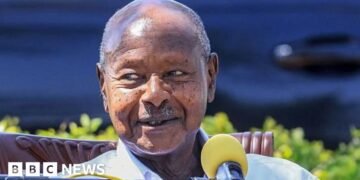























In the aftermath of Thursday’s presidential election in Uganda, President Yoweri Museveni has emerged as the frontrunner, as reported by the electoral commission. Preliminary results indicate that Museveni secured 76% of the votes, with 45% of polling stations accounted for, while opposition leader Bobi Wine trails with approximately 20% of ballots cast.
This election holds significant implications for Uganda’s political landscape, as Museveni, who is 81 years old, seeks a seventh consecutive term amid a backdrop of civil unrest and a highly contentious campaign. The results could further entrench Museveni’s long-standing rule or galvanize opposition efforts for future elections.
Key Developments
- Museveni leads with 76% of votes counted from 45% of polling places.
- Opposition candidate Bobi Wine trails with about 20% of the vote.
- The election took place following a period marked by violence and political tension.
- This represents Museveni’s bid for a seventh term in office.
Full Report
Election Day Tensions
Ugandans cast their ballots on Thursday amidst heightened tensions and an often violent campaign season. This charged atmosphere adds weight to the electoral outcomes, raising concerns about the integrity of the democratic process in the country.
Electoral Commission Results
On Friday morning, the electoral commission announced the initial results, confirming Museveni’s substantial lead. These figures reflect returns from nearly half of the nation’s polling stations, indicating a solid advantage for the incumbent president.
Public Reaction
As the country waits for further results, reactions from the populace and political analysts are mixed, with some expressing disappointment over the apparent lack of competitiveness in the election and others cautiously optimistic about the prospects for change.
Context & Previous Events
This election is particularly important as Yoweri Museveni has ruled Uganda since 1986. His continuous tenure has been marked by numerous allegations of authoritarianism, and this election comes in the wake of widespread civil unrest and scrutiny over the electoral process. The previous campaign period featured significant violence, raising alarms about potential election integrity and safety of voters.