






















Cuba Mourns Loss of 32 Troops, Reflects on Shifting Dynamics Post-Venezuela Raid
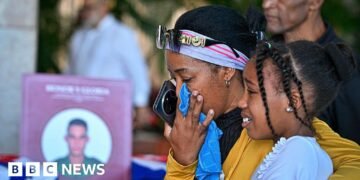
As military personnel, officials, and civilians gathered in Havana, a poignant funeral procession unfolded to honor 32 Cuban service members killed during a recent U.S. military intervention in Venezuela. This significant event marks one of the largest losses of Cuban troops since the Bay of Pigs invasion over six decades ago, signaling deep implications for Cuba’s political landscape and its alliance with Venezuela.
Why It Matters
The deaths of these soldiers not only emphasize the risks associated with Cuba’s involvement in Venezuela but also highlight the evolving geopolitical tensions in the region. With the Cuban government admitting to the presence of its intelligence personnel in Venezuela’s security apparatus, the impact of this loss may reverberate far beyond the tragedy itself, influencing diplomatic relations and internal Cuban politics as it faces challenges on multiple fronts.
Key Developments
- A funeral cortege carrying the remains of the 32 fallen soldiers received high-profile attention, with leaders, including Raul Castro and President Miguel Diaz-Canel, overseeing the event.
- Each urn was presented draped in the Cuban flag alongside a photograph of the deceased, under the phrase "honour and glory," emphasizing the regime’s commitment to its narrative of heroism.
- This incident marks the largest number of Cuban military casualties due to U.S. action since the Bay of Pigs invasion in 1961, revealing a rare direct confrontation between the two nations’ forces.
- The U.S. military’s successful operation reflects its superior training and equipment, resulting in minimal repercussions for American forces while inflicting significant losses on Cuban personnel.
- In a striking shift, Venezuela’s interim president spoke favorably of U.S. President Trump, indicating a potential rapprochement between the two administrations that may complicate Cuba’s position.
Full Report
Mourning the Fallen
The funeral procession began at dawn, where crowds applauded as the remains of the soldiers were transported from the airport to the Armed Forces Ministry. The display of national pride and sorrow was palpable as family members mourned the loss of their loved ones, emphasizing the personal impact of this geopolitical conflict.
The Cuban Government’s Admission
Following the U.S. raid and the subsequent removal of Nicolas Maduro from power in Venezuela, Cuba’s leadership conceded a long-held denial regarding the presence of Cuban operatives within Venezuela’s regime. This acknowledgment marks a significant evolution in the Cuban government’s narrative, revealing deep ties between both nations’ security operations.
Shifting Politics
The deaths of these soldiers have stirred discussions within Cuba regarding its political future. Former Cuban commander Victor Dreke expressed a resolute belief that Cuba can withstand its challenges, despite the grim economic backdrop and the diminishing support from Venezuela. He emphasized a readiness to defend the nation while reaffirming a desire to avoid direct conflict with the U.S.
Context & Previous Events
Cuba has historically faced limited direct military encounters with the U.S. since the Cold War, with the Bay of Pigs invasion in 1961 being a notable exception. The recent intervention in Venezuela marks a rare instance of conflict, drastically altering the dynamics within the region. Over the years, Cuba has trained Venezuelan officials in maintaining control over the populace, illustrating the longstanding partnership between the two nations. However, ongoing economic challenges and reduced Venezuelan support now cast uncertainty over Cuba’s political future.