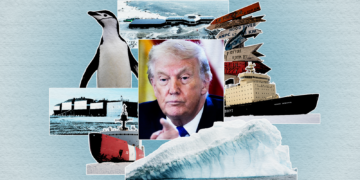























As the Trump administration focuses its efforts on strategic holdings like Greenland, America’s influence in Antarctica appears to be waning, leaving potential power gaps that countries like China are poised to exploit. While the U.S. continues its ambitious plans in the Arctic, a marked reduction in research funding for Antarctica raises concerns about the effectiveness of its presence in a region crucial for global climate studies.
Why It Matters
The retreat from scientific research and logistical support in Antarctica threatens to undermine decades of American influence on the continent. With geopolitical shifts and an increase in China’s ambitions, the landscape of international cooperation—or competition—could drastically change, particularly as climate change accelerates the unlocking of natural resources previously considered inaccessible.
Key Developments
- Proposed funding cuts to climate-related Antarctic research are described as “catastrophic” by experts.
- The U.S. has been forced to lease an icebreaker from Ukraine to maintain operations in Antarctica after cutting funding for its own vessels.
- China has significantly expanded its presence, now operating five bases and commissioning new icebreaking ships, enhancing its research capabilities.
- Concerns persist about potential unilateral actions by countries like China and Russia regarding the exploitation of resources, despite the Antarctic Treaty that prohibits military and commercial activities.
Full Report
Scientific Research Cuts
Prof. Ted Scambos, a glaciologist at the University of Colorado, has characterized proposed budget cuts to climate research in Antarctica as devastating. Research in this region is crucial not only for understanding global climate patterns but also for maintaining national presence and influence.
Shifting Geopolitical Dynamics
Under the Antarctic Treaty established in 1959, nations are allowed to conduct scientific research, and while territorial claims are suspended, countries seek to uphold their influence through consistent research and the development of supporting infrastructure. The declining American presence, exemplified by a reduction in scientific personnel and the need to lease an icebreaker, raises questions about the future of U.S. leadership in Antarctic research.
China’s Expanding Ambitions
China has rapidly built its footprint in Antarctica, with five operational bases and another planned for the near future. The commissioning of new icebreakers demonstrates its commitment to establishing a stronger presence. While involved in research, there are indications that China’s long-term goals may include interests beyond the scope of the Antarctic Treaty.
Russia’s Interests
In a parallel development, Russia announced the discovery of significant oil reserves near Antarctica, claiming the research was purely scientific. However, such discoveries raise broader concerns about future exploitation and potential violations of the treaty aimed at preserving Antarctica for peaceful and scientific purposes.
U.S. Position and Future Implications
America’s longstanding dominance in Antarctica is jeopardized by diminishing resources and the current administration’s policies that focus on other strategic interests. The current situation presents opportunities for other nations, particularly the UK, to forge new collaborations in scientific research, potentially tilting the balance of influence further away from the United States.
Context & Previous Events
Historically, the United States has been a key player in Antarctic research, operating one of the most significant bases on the continent located at the South Pole. Previous territorial claims by countries such as the UK and others were set aside under the Antarctic Treaty, which emphasizes the area’s role as a haven for science and peace. The geopolitical landscape remains complicated as climate change continues to alter the physical and economic possibilities of this remote region.