






















Tensions Persist Between Denmark and Trump Over Greenland
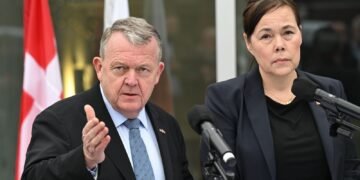
Denmark has reaffirmed its "fundamental disagreement" with former President Donald Trump regarding Greenland, following discussions between U.S. Vice President JD Vance and Secretary of State Marco Rubio. Danish Foreign Minister Lars Lokke Rasmussen characterized the talks as "frank but constructive," highlighting the ongoing divide on security perspectives for the territory.
Why It Matters
The geopolitical stakes surrounding Greenland have heightened, particularly amid concerns over U.S. military strategy and the influence of nations like China and Russia in the Arctic region. With both sides committed to addressing security issues, the dialogue reflects broader strategic interests between the U.S. and its European allies.
Key Developments
- Danish Foreign Minister Lars Lokke Rasmussen announced the establishment of a high-level working group aimed at finding common ground on security matters.
- Greenland’s Foreign Minister Vivian Motzfeldt emphasized the importance of respectful dialogue to safeguard interests.
- Former President Trump has expressed that it would be "unacceptable" if Greenland is not under U.S. control, linking it to a proposed defense initiative.
- European leaders, including French President Emmanuel Macron, have condemned Trump’s remarks regarding Greenland, stressing solidarity with Denmark and Greenland.
- Both Denmark and Greenland plan to bolster their military presence in the Arctic, with support from multiple allied nations.
Full Report
Ongoing Disagreements
The recent diplomatic discussions underscored a significant rift between Denmark and Trump. Rasmussen acknowledged the clear difference in views during their talks, stating the American side has made its stance known while Denmark maintains a contrasting perspective. Although both parties agreed to disagree, the establishment of a working group signals a commitment to dialogue.
Addressing Security Concerns
The newly formed working group will focus on resolving American security concerns while respecting Denmark’s boundaries. Rasmussen highlighted the need for cooperation to address potential threats in the Arctic, particularly as military escalations loom.
Trump’s Controversial Position
In a recent Truth Social post, Trump stated that it would be "unacceptable" for Greenland not to be controlled by the U.S., referring to the territory’s strategic importance for missile defense initiatives. His remarks drew widespread criticism from European leaders who underscored the principles of sovereignty and alliance.
European Response
European Parliament leaders have explicitly condemned Trump’s comments, urging the EU to provide tangible support for both Denmark and Greenland. Ursula von der Leyen, President of the European Commission, affirmed the EU’s commitment to respecting Greenlanders’ wishes.
France and Sweden announced plans to enhance their military presence in lands adjacent to Greenland, expressing a unified European defense strategy amid U.S. posturing.
Context & Previous Events
This dialogue follows previous tensions regarding Greenland, particularly stemming from Trump’s past interest in purchasing the territory. International relations in the Arctic have become increasingly complex, as strategic interests among global powers, especially concerning military capability, intensify.
In summary, while conversations are ongoing, the fundamental disagreement on sovereignty and military strategy points to ongoing complexities in U.S.-European relations concerning Greenland.