






















Trump Administration Halts "Orphan Tax" on Foster Care Social Security Benefits
The Trump Administration is taking significant steps to end a practice that has long affected children in foster care: state governments seizing Social Security survivor benefits. A directive from Alex Adams, assistant secretary at the Department of Health and Human Services (HHS), has urged states to cease what he deems an unjust "orphan tax," providing a more stable financial outlook for vulnerable children.
Why It Matters
The decision impacts the lives of children in foster care, many of whom face financial instability after losing a parent. Survivor benefits, on average around $1,100 per month, can serve as a crucial lifeline, assisting in education and transitional living expenses. Ending the practice not only addresses a moral issue but also aims to improve the long-term outcomes for children who are often left to navigate life without parental support.
Key Developments
- The directive was communicated to governors in December, calling for an end to states’ long-standing practice of appropriating survivor benefits.
- About 39 states are involved, as many had previously seized these funds to compensate for foster care expenses.
- Alex Adams criticized the policy, stating that children should not bear financial burdens due to circumstances beyond their control.
- The move has garnered bipartisan support, highlighting a shared belief that the state should not exert overreach into children’s private assets.
- The discussion around this issue continues, with hopes for further reforms on disability checks that foster children also receive.
Full Report
Unjust Financial Practices
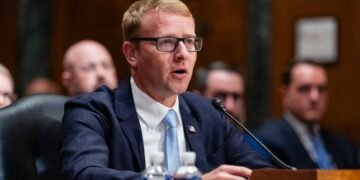
During a Senate Finance Committee confirmation hearing, Alex Adams emphasized the immorality of the orphan tax, arguing that it is unconscionable for states to take benefits intended for children who have lost parents. The funds, he noted, could provide stability during a tumultuous time in these children’s lives. "They are not in foster care by any fault of their own. And they certainly should not be asked to pay their own bill," he stated.
Justin Kasieta shared a personal story illustrating the effects of this policy. After losing his father, his family relied heavily on these benefits. However, following his mother’s health struggles, he and his siblings entered the foster system, where the state seized approximately $18,000 of their benefits. Kasieta now reflects on his luck in securing a college education and a successful career but emphasizes that most children do not fare as well.
Policy Changes
Adams, previously Idaho’s director of Health and Welfare, was instrumental in changing similar policies within the state. After gaining insights into the seizure of survivor benefits, he enacted reforms to halt the practice. Now serving at the federal level, he has swiftly extended this initiative to the remaining states. HHS Secretary Robert F. Kennedy Jr. publicly endorsed the change, emphasizing that "every child deserves a home and a fair chance to thrive."
The response to the new policy has mostly been positive, with bipartisan support emerging as both parties recognize the necessity to protect vulnerable children from bureaucratic overreach.
Financial Implications
While some state officials claim that the practice is financially motivated, Adams disagrees, arguing that the funds seized represent only a fraction of the overall child welfare budget. He estimates these survivor benefits account for roughly $34 million nationwide, a trivial amount when compared to the substantial financial resources devoted to child welfare.
However, a related issue remains unresolved. States also take Supplemental Security Income (SSI) checks from children in foster care, an area requiring greater attention and potential Congressional action for reform.
Context & Previous Events
An investigation by NPR and The Marshall Project in 2021 brought the orphan tax to light, driving bipartisan efforts in several states to reconsider its implementation. The Trump Administration’s recent actions represent a significant shift towards protecting foster children and ensuring they receive the benefits intended to support them during challenging times.
As states adapt to this new directive, the hope is that the balance of support will tilt away from exploitation and toward empowerment, ensuring that children in foster care have a fair chance at a thriving future.






