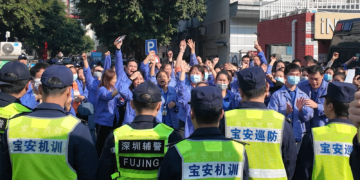























Rising Worker Protests in Shenzhen Highlight Growing Dissent in China
In Shenzhen, an industrial hub, hundreds of factory workers are striking amid increasing economic grievances. This notable display of dissent, prompted by reduced hours and wages at Yi Li Sheng’s audio equipment factory, underscores a broader trend of rising worker unrest in China.
Why It Matters
The recent strike reflects a critical juncture for labor rights in China, where workers are increasingly vocal about their economic struggles. With the government’s heavy-handed response to protests, these developments could signal significant unrest beneath the surface of China’s tightly controlled society.
Key Developments
- Over 500 workers at the Yi Li Sheng factory in Shenzhen began a strike to protest decreased working hours and insufficient wages.
- Workers report that their wages have become insufficient to cover basic living costs in the expensive city.
- Law enforcement heavily surrounded the protesters, reflecting the sensitivity of such gatherings in China.
- Research indicates that incidents of dissent have surged, with over 5,000 cases documented in just one year by the China Dissent Monitor (CDM).
- Strikes typically focus on economic issues, with 85% of incidents recorded since mid-2022 pertaining to monetary grievances.
Full Report
The Strike at Yi Li Sheng
In an industrial sector of Shenzhen, a noticeable standoff emerged as factory workers donned matching blue uniforms to initiate a strike on their fourth consecutive day. Employees from Yi Li Sheng, a manufacturer of audio equipment, declared that shifting large portions of factory operations abroad had led to reduced hours and inadequate income to sustain living in Shenzhen, known for its high cost of living.
"I can’t survive on just 1900 RMB (£200) a month," lamented one tearful worker. Yi Li Sheng has not responded to these claims, which showcase the urgent economic pressures facing many in the workforce.
Authorities’ Response
The police presence at the scene was substantial, with officers encircling the protests and swiftly intervening when foreign media attempted to capture footage. Cameras were seized, and journalists faced intimidation, emphasizing the extent of governmental censorship surrounding dissent.
Data on Dissent
Paradoxically, despite the difficulty in documenting protests, research by the CDM indicates a significant rise in incidents. The organization reported a 48% increase in unrest-related occurrences during the first eleven months of the previous year compared to the same period in 2024. Sources suggest that the true figures may be even higher, as many protests go unrecorded or are scrubbed from social media.
Kevin Slaten, the research lead for CDM, noted, "Real-world protests are much higher than what we capture." The motivations behind these protests vary widely, ranging from delayed wages to land disputes and issues within educational systems.
The Role of Activists
Activists from outside the country have made efforts to disseminate information about these protests. An individual operating under the alias "Li" has gained traction by sharing protest videos on social media platforms. He highlights the interrelated nature of economic challenges and social stability, stating that government oppression only fuels greater unrest.
Context & Previous Events
The current wave of protests is reminiscent of the "White Paper Protests" of 2022, which erupted against the backdrop of stringent COVID-19 restrictions in China. Although overt political commentary remains rare, recent gatherings demonstrate an increasing willingness among citizens to voice their dissatisfaction with the status quo.
While some Chinese citizens remain blissfully unaware of the protests or see no need to demand change, the rising unrest in urban centers is becoming increasingly difficult for the government to suppress fully.