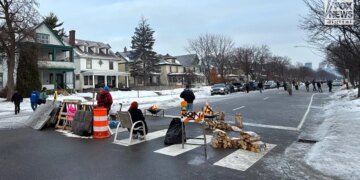























Rising Tension in Minneapolis Amid Traffic Obstruction and Federal Enforcement Operations
As protests intensify in Minneapolis following a controversial federal immigration enforcement operation, former police officials are sounding alarm bells over the growing normalization of traffic obstruction and the implications for public safety. This concerning trend, they assert, signals a departure from established law enforcement protocols.
Why It Matters
The ongoing protests have united community members and raised significant questions about local and federal law enforcement dynamics. As streets become battlegrounds for competing interests, the role of police in maintaining order and safety is increasingly scrutinized. The situation poses risks not only to the demonstrators and law enforcement officers involved but also to the broader public.
Key Developments
- Retired NYPD detective Mike Alcazar expressed deep concern over the lack of intervention against obstructive protest practices, which he claims undermine public safety.
- Alcazar detailed that the boundaries traditionally enforced during protests are now blurred, allowing for disruptions to traffic and pedestrian access.
- After a fatal encounter involving an ICE agent, protests erupted, with demonstrators blocking roadways and confronting law enforcement.
- Minneapolis officials argue that the demonstrations have remained largely peaceful, although they emphasize the importance of keeping streets clear for emergency access.
Full Report
Obstructive Demonstrations
Former NYPD detective Mike Alcazar criticized the current state of protest management, claiming that the obstruction of traffic and interference with law enforcement activities were intolerable during his career. Alcazar noted that demonstrators historically exercised their First Amendment rights within specific limits designed to prevent disorder. “You cannot take over a roadway. That is not part of your right to protest," he emphasized.
He expressed concern that a lack of enforcement is emboldening agitators to disrupt federal operations, which are typically not equipped to handle hostile crowds without local law enforcement support. “ICE agents are trained for enforcement operations—not crowd control,” Alcazar stated.
Federal Enforcement Under Scrutiny
Tensions heightened after a recent incident where an ICE agent shot and killed 37-year-old Renee Nicole Good during an enforcement operation. Claims regarding Good’s actions during the encounter remain disputed, further igniting public outcry and agitation. Following the event, demonstrations escalated, with activists confronting federal agents and blocking roadways, leading to a chaotic atmosphere.
Minneapolis city officials have characterized the protests as largely peaceful, noting efforts are underway to maintain public safety. Emergency services leaders expressed concerns about the impact of blocked streets on life-saving responses, asserting that “every second matters when lives are on the line.”
Breakdown of Responsibilities
Further complicating the situation, city officials, including Mayor Jacob Frey, criticized the presence of federal immigration agents, asserting that their operations contribute to public disorder rather than safety. Critics argue that local law enforcement could play a vital role in managing crowds and ensuring safety without participating in immigration enforcement.
Adam Swart, CEO of Crowds on Demand, remarked on the mixed nature of recent protests, warning that actions such as blocking streets can create confusion between lawful demonstrators and those causing disruptions. “Law enforcement can’t easily distinguish between peaceful protesters and people creating those obstructions,” he noted.
Context & Previous Events
This uproar in Minneapolis follows earlier protests after previous federal enforcement operations have raised community tensions. The blend of lawful assembly and obstruction has sparked fears regarding public safety and the role of law enforcement in crowd control, especially as such dynamics continue to evolve amid ongoing national discussions surrounding immigration and policing.






