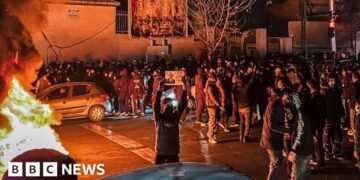























Trump Weighs Military Options Amid Iranian Protests
President Donald Trump has stated that the U.S. military is assessing “very strong options” concerning Iran as anti-government protests enter their third week, resulting in significant loss of life. With reported deaths nearing 500 and many more injuries during protests, tensions are escalating between Washington and Tehran.
Why It Matters
The ongoing unrest in Iran poses serious implications for regional stability and U.S. foreign policy. Iranian officials have labeled demonstrators as “vandals,” while Trump’s consideration of military action heightens fears of escalating violence. This situation mirrors a broader crisis of legitimacy for Iran’s leadership, challenging its governance and societal cohesion.
Key Developments
- Trump confirmed the U.S. military is exploring potential military responses to the protests.
- The Human Rights Activist News Agency (HRANA) reports nearly 500 protester deaths.
- Iran has initiated three days of mourning for those the government refers to as “martyrs.”
- Over 10,600 individuals have been arrested since the protests began.
- Reports indicate that Iranian leaders are seeking negotiations with the U.S., while Trump claims they desire to engage in talks due to their current difficulties.
Full Report
Protests and Response
Protests erupted in late December, initially triggered by a dramatic drop in the value of Iran’s currency. These have since escalated into a substantial challenge to the authority of Supreme Leader Ayatollah Ali Khamenei. Iranian leaders responded by organizing pro-government rallies, labeling protesters as “a bunch of vandals.”
Casualties and Crackdown
Recent visuals have depicted a grim scene with approximately 180 body bags seen in a morgue near Tehran, highlighting the severity of the unrest. Reports suggest that authorities are hastily burying bodies to limit identification, as hospitals are said to be overwhelmed with casualties. Iranian security forces are also apparently utilizing drones to monitor crowds, exacerbating fears among citizens.
Trump’s Military Considerations
While detailed specifics of military options were not disclosed by Trump, a U.S. official indicated that strategies could include not only potential strikes but also cyber actions and enhanced sanctions. Iran’s parliament speaker cautioned the U.S. against making any miscalculations, warning that U.S. and Israeli military assets in the region could be targeted if hostilities escalate.
Internet Shutdown and Communication Barriers
The Iranian government has imposed an internet shutdown, complicating efforts to share information about the protests and any government crackdown on demonstrators. Many citizens are relying on alternative communication methods, such as Starlink, despite fearing that such channels could lead to government retaliation.
Context & Previous Events
The current protests are the most significant in Iran since the 2022 uprising, triggered by protests following the death in custody of Mahsa Amini, a young woman detained for alleged violations of hijab regulations. The unrest reflects a deepening generational and social divide within Iranian society, as long-standing grievances come to the forefront.